Five distinct climatic zones of Kilimanjaro

Kilimanjaro

Zone One -The Lower Countryside Slopes of Mount Kilimanjaro

The lowest zone on the foothills of Mount Kilimanjaro in Northern Tanzania is thought by many to be the least interesting, since it is settled and under cultivation, offering little in the way of wilderness experience or wildlife encounters. But it has a richness of its own and offers much to the discerning visitor beginning a Kilimanjaro trekking tour.

From 800 meters to 1800 meters, the rich land, watered from the mountain above, was formerly lowland brush and forest, but has been cleared over centuries to make way for traditional crops of bananas and yams as well as potatoes, beans and maize. Northern and eastern areas are arid and dusty for agriculture and retain something of their former character. Plantations of pine trees for fuel and carbon credits are a more controversial development, but the orderly rows are aesthetically attractive as are the coffee plantations on the southern side of the mountain.

Wild flowers can still be seen here, the poisonous Lantana camara with its pretty heads of tiny pink and yellow flowers spreads everywhere as do many clovers. In front of tangled hedges of clematis and climbing pea, verges of feathery penisetum grass and blue spikes of coleus thrive in the hot sun. You may even see the elephant trunk flower, a beautiful red, green and yellow balsam with a curled tube shaped like an elephant’s trunk, which grows nowhere else in the world.

Chagga settlements intersperse grassland and crops, affording opportunities to learn about the local people. Their goats, cows and chickens also move freely in the area. Farming has caused most wild animals to move higher up into the forest, so expect to see more in the transition belt.
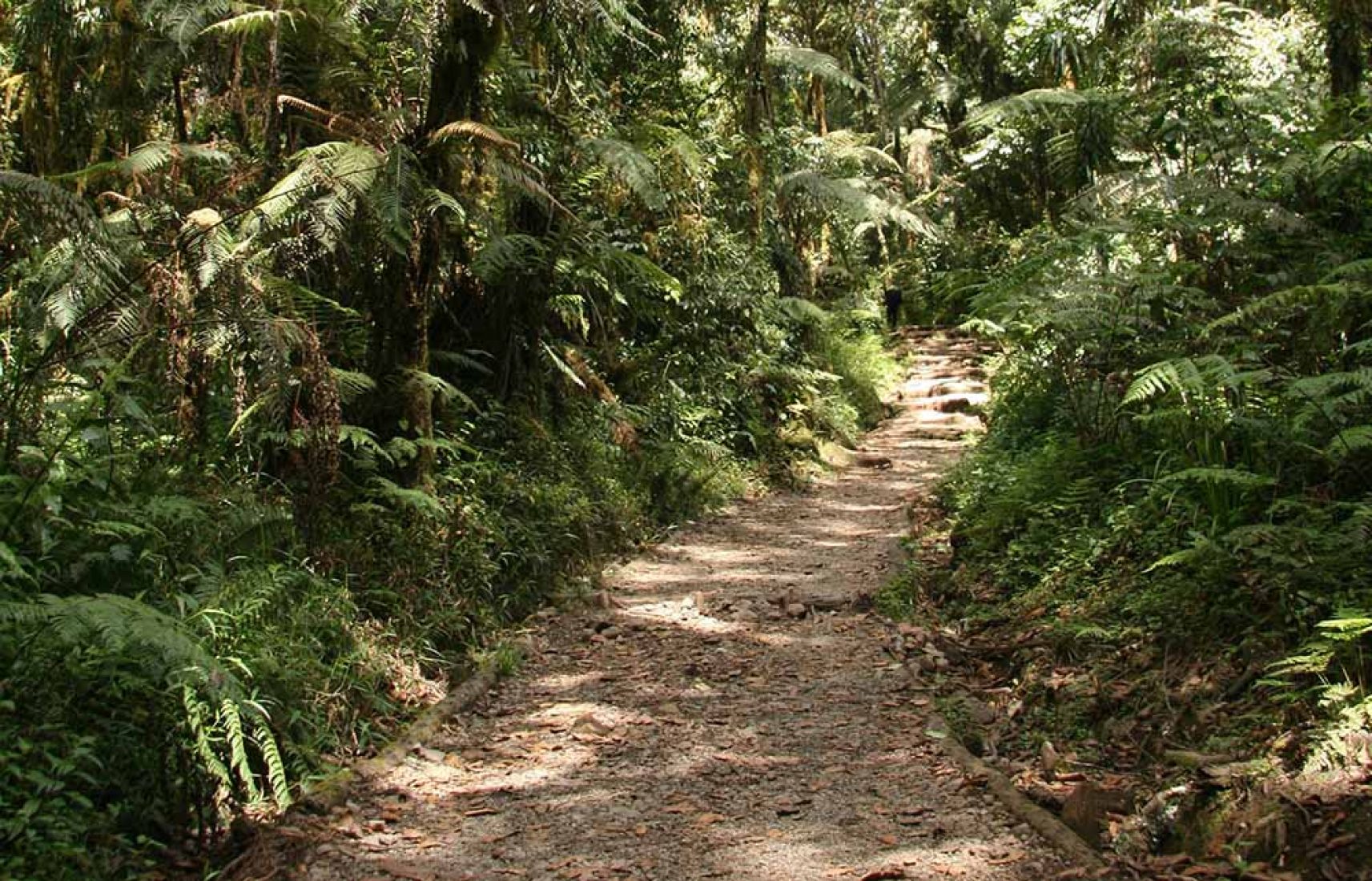
14609690 - mt kilimanjaro climbing expedition in tanzania, africa

Zone Two - Montane Forests Of Kilimanjaro

Kilimanjaro highlands travel in East Africa is best idealized in the tropical forest zone which starts from 1000 meters to 2800 meters. A number of small mammals, such as hyrax and bush babies venture amongst the crops looking for food, as do many birds, but most retire to the forest for shelter. Bulbul and boubou, cascading their nightingale melodies, and robin chat fill the air with rapture at dawn and dusk.

Brilliantly plumaged sunbirds plunge their needle-like curved beaks into the nectar tubes of scented tropical blossoms. Crested turaco flash unexpected scarlet underwings. The tropical montane forest zone of the “Shining Mountain” is rich and beautiful. Exquisite swallowtail butterflies feed on nectar from blood-lilies.

Nocturnal cats including civets and genets venture out at dusk with galago, aardvark and honey badgers, all animals you are more likely to hear than to see. There are shy antelopes from duiker to suni and even elusive leopard in the rainforest, but they are grim to spot. Bush pigs are present too. The north and west slopes have the presence of bigger game opportunities as the wildlife have access from the western plains of Kilimanjaro National Park and Amboseli in southern Kenya. Elephants, giraffes, buffalos and even lions have been spotted. The humid southern forest, wreathed in cloud, absorbs moisture that permeates the lower mountain reaches to irrigate the farmland.

Scented powder-puff flowers of albizia add their heady perfume and veils of bearded lichen hang from tree limbs, dripping onto the mossy forest floor. Humidity is high and nights are cold. Experience a Kilimanjaro hiking safari through this shadowy forest where orchids bloom amongst ferns clustered along green branches, festooned with delicate trails of lemon-scented begonias. Drifts of mimulus and impatiens carpet the spongy forest floor.

The northern woodland is drier with olives and twisted juniper. Colobus monkeys with white capes and tails, and blue monkeys (which are actually black and grey with a tinge shade of blue hair), can be heard as they swing through the overhead canopy of figs and camphor wood, whilst baboons stalk the paths.

Zone Three - Heathlands and Moorlands Of Kilimanjaro Mountain

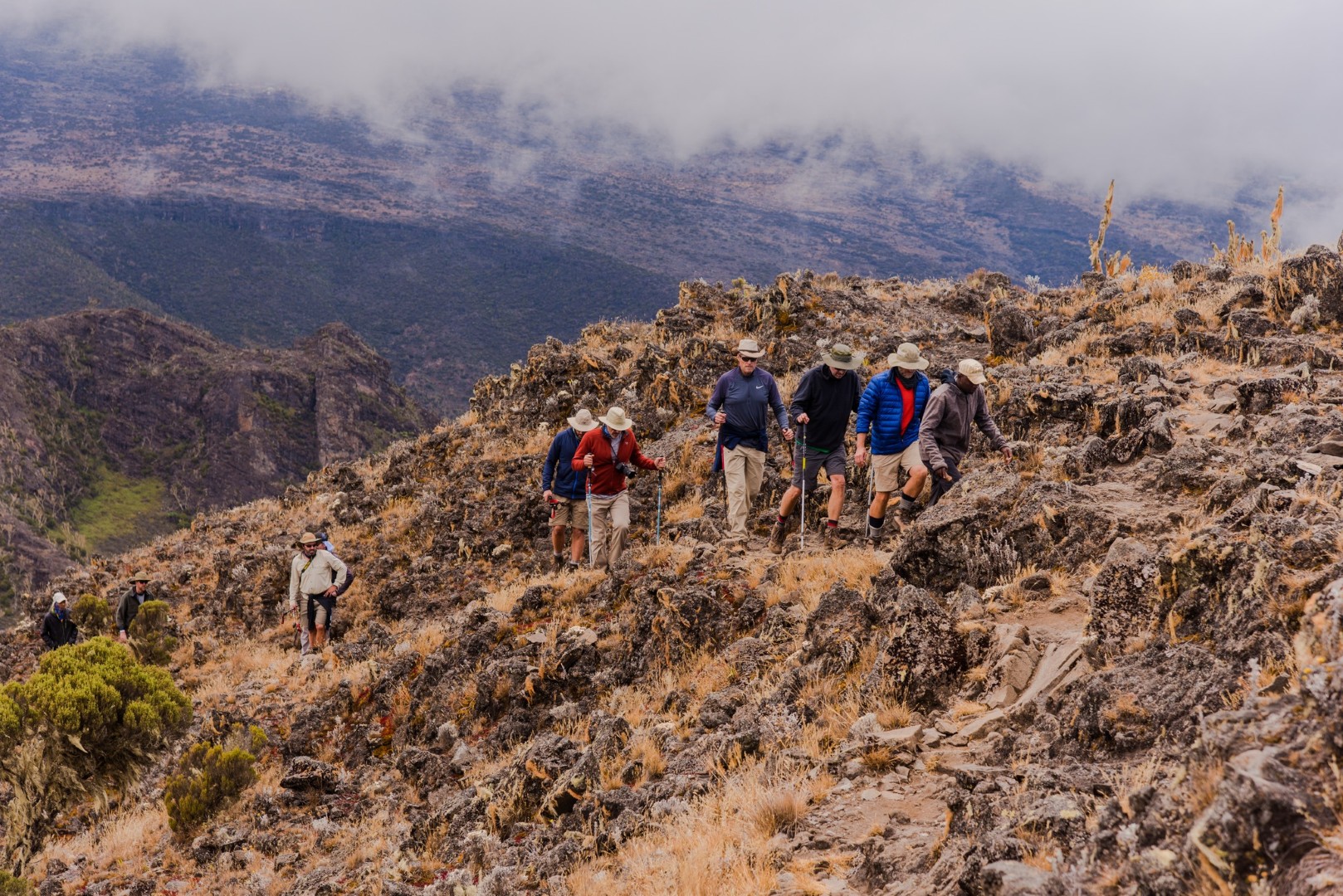
In the next transition zone between 2800 meters to 4000 meters, tall, silky heathers grow beside tasseled golden flowers of hypericum. Giant lobelias and groundsel appear in clearings, alien in form, fascinated and weird in outline. Club-like lobelias can reach up to three meters tall, but the groundsel soars to five meters before breaking into terminal clusters of tiny golden daisy flowers. The moorland and heath of the middle zone are drier and cooler than the forest, but the sun will scorch you unpityingly.

Even so, daytime mists are common and nights are freezing. Amongst the unbelievable flora, you will find the giant protea, beloved of florists for its dramatic, long-lasting cone shaped blossom. Stretches of grassland are brightened with flowering bulbs in season: red hot poker and gladiolus in particular. Although the moorland is too high for most animals, there have been sightings on Rongai Trek of transitory game from elephants to elands, and rare spotting of canine lions have been seen on Shira Plateau.

Mice and mole-rats are sufficiently abundant to feed highland civets, servals and ultra-mysterious leopards. Amongst Erica species, which range from bell flowers inches tall to gnarled tree heathers ten meters high, gem-like sunbirds dart and hover. Buzzards also hover high in the sky watching for tiny, scurrying mammals in the carpet of alpine flowers, thistles and ornamental grasses. Many of the plants have evolved amazing strategies to shelter their flowers from frost in thick rosettes of waxy or hairy leaves.

Some exude a slime which freezes over the buds, enclosing them in a protective glassy dome. It is a botanists’ paradise, but a fragile one, easily damaged by careless walkers, especially the slippery sedges and low-growing buttercups in the bogs. You will certainly see the opportunist White-necked raven, stalking round the overnight huts expecting tidbits from visitors on their Kilimanjaro climb expedition.
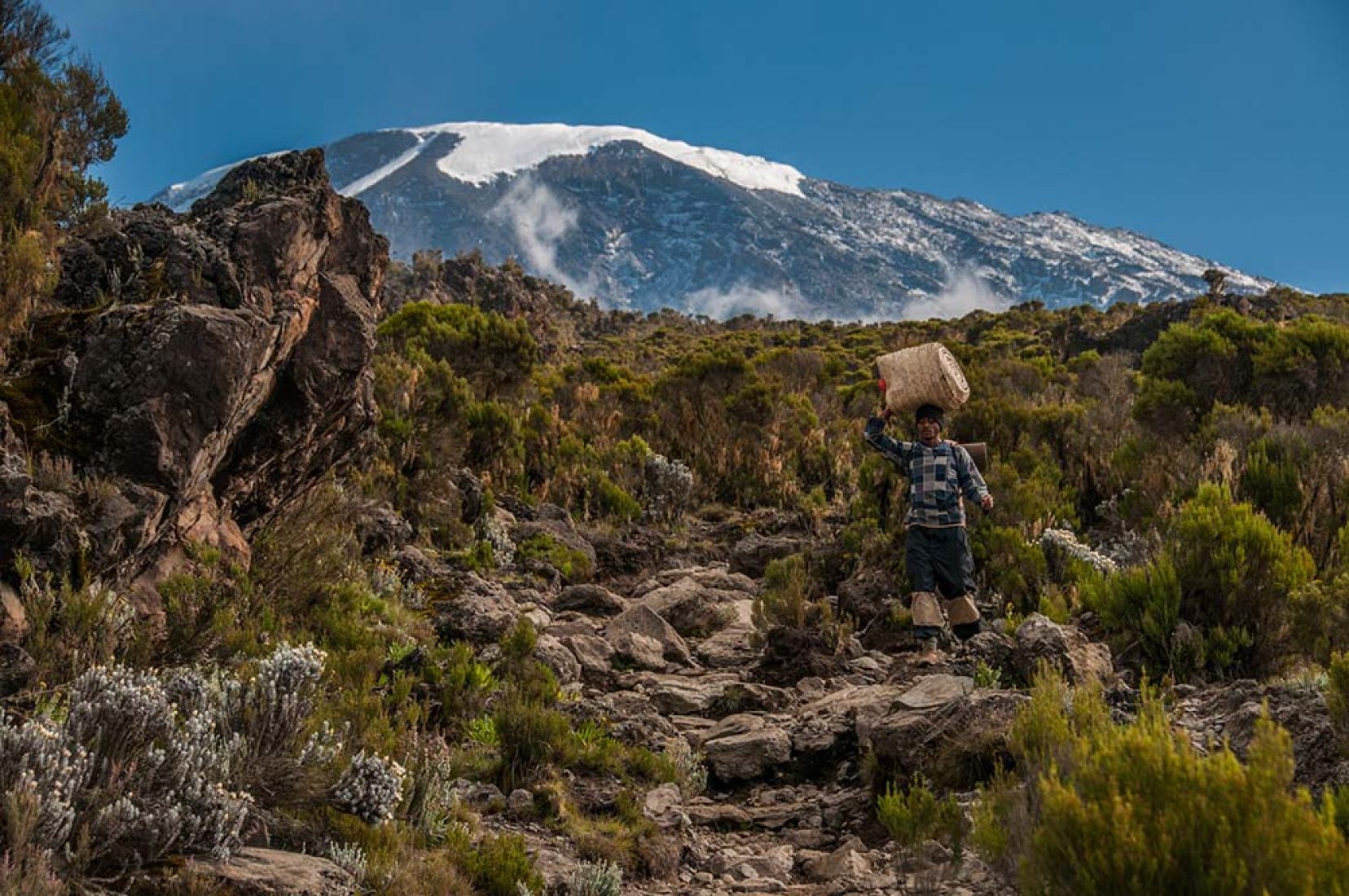
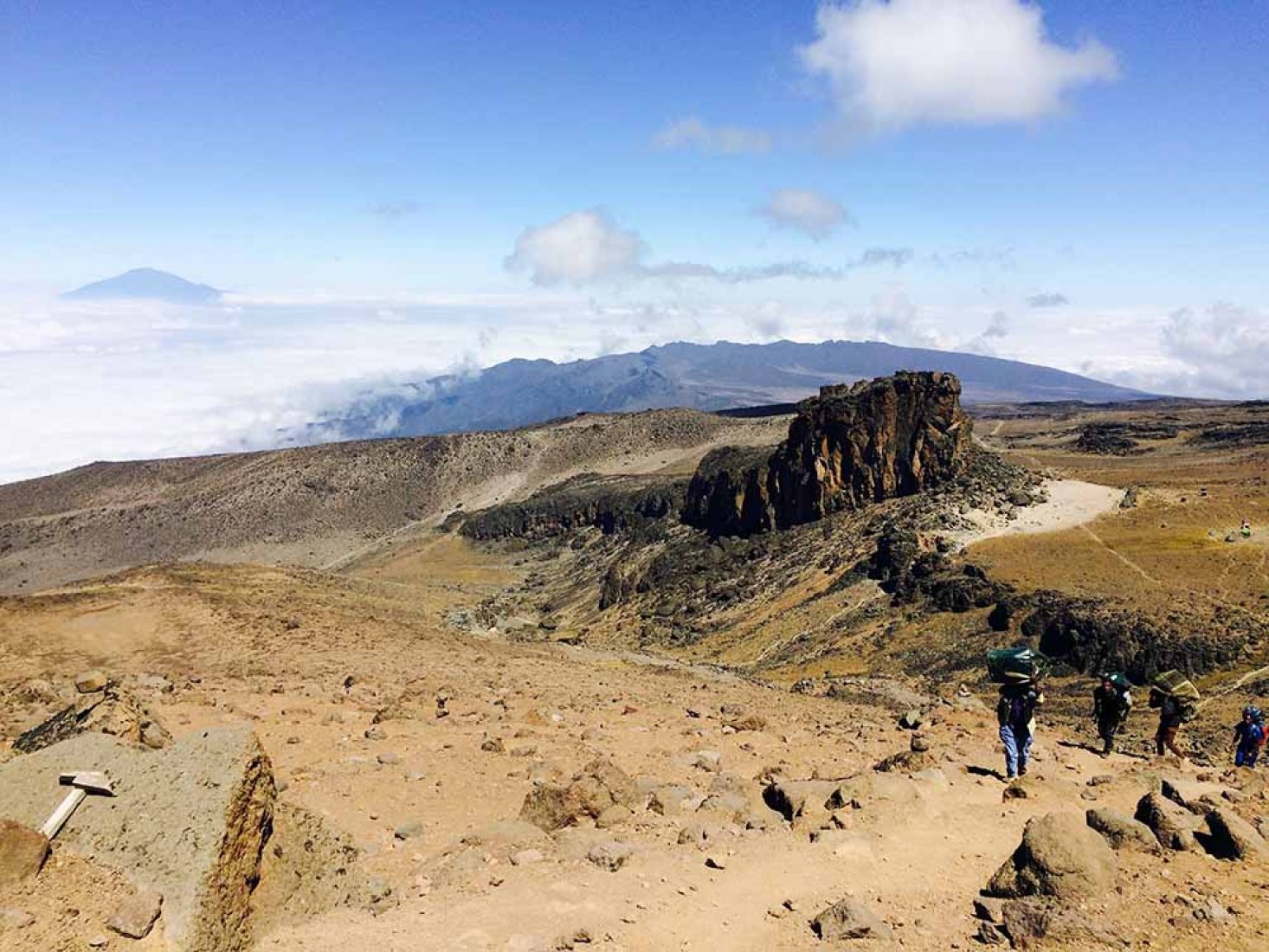
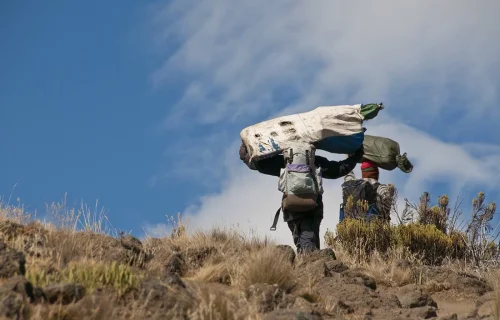
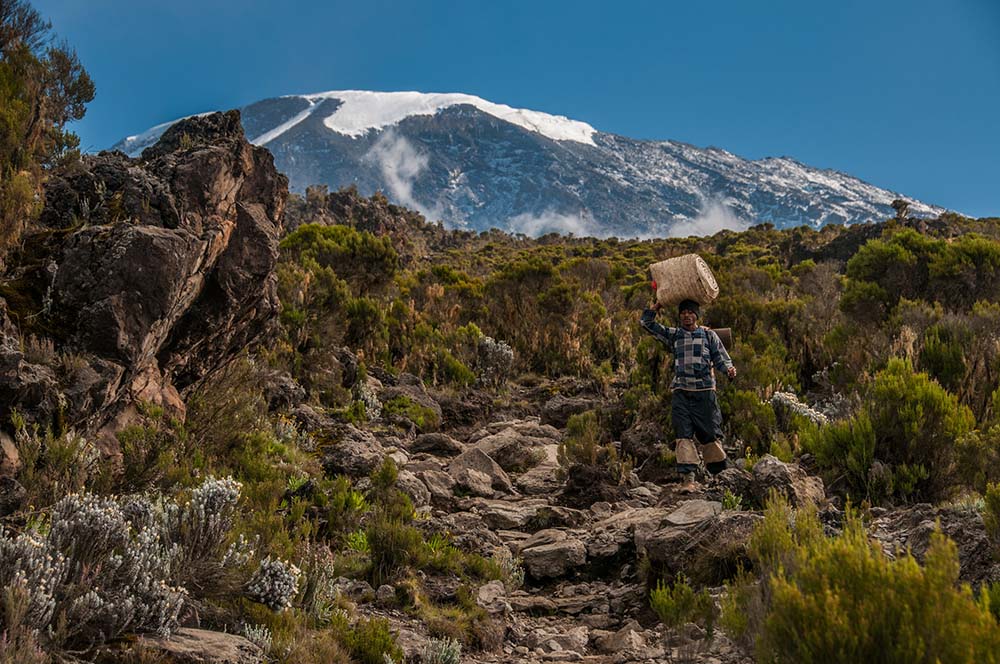
29483546 - a porter heading down the rocky path from millenium camp back to the main enterance of the national park
kilimanjaro 13

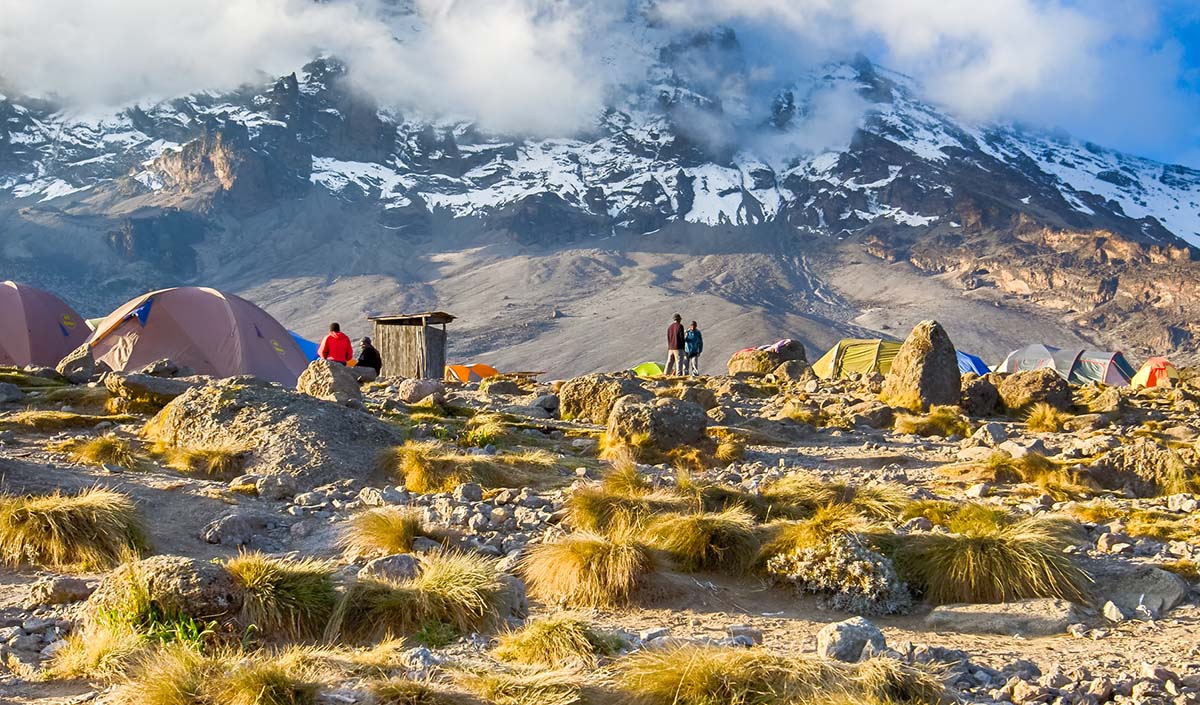
Zone Four - The Towering Alpine Deserts Of Mt. Kilimanjaro

The change from one zone to another is a gradual diminution of plant and animal life, and here at alpine altitudes of 4000 meters to 5000 meters, ground-hugging jewels like sky-blue gentians and tiny golden buttercups gradually peter out in favor of papery everlasting flowers, helichrysums and asters which have fine silvery hairs to insulate them and catch both sun and moisture.

Only insects and spiders inhabit the rock crannies, protected from scouring winds that deter other insects, as well as most birds. In a few sheltered spots where soil and moisture can be found, delicate white Alpine arabis cling to life as they do from Lapland to the Alps.

Plants have adapted to the 40 degree fluctuations between summer days and winter nights which causes a process of solifluction when the sparse pockets of soil expand and contract as they alternately freeze and thaw, uprooting less than 60 plant species still struggling to survive, so that the best adapted are more primitive life forms which have no roots at all.

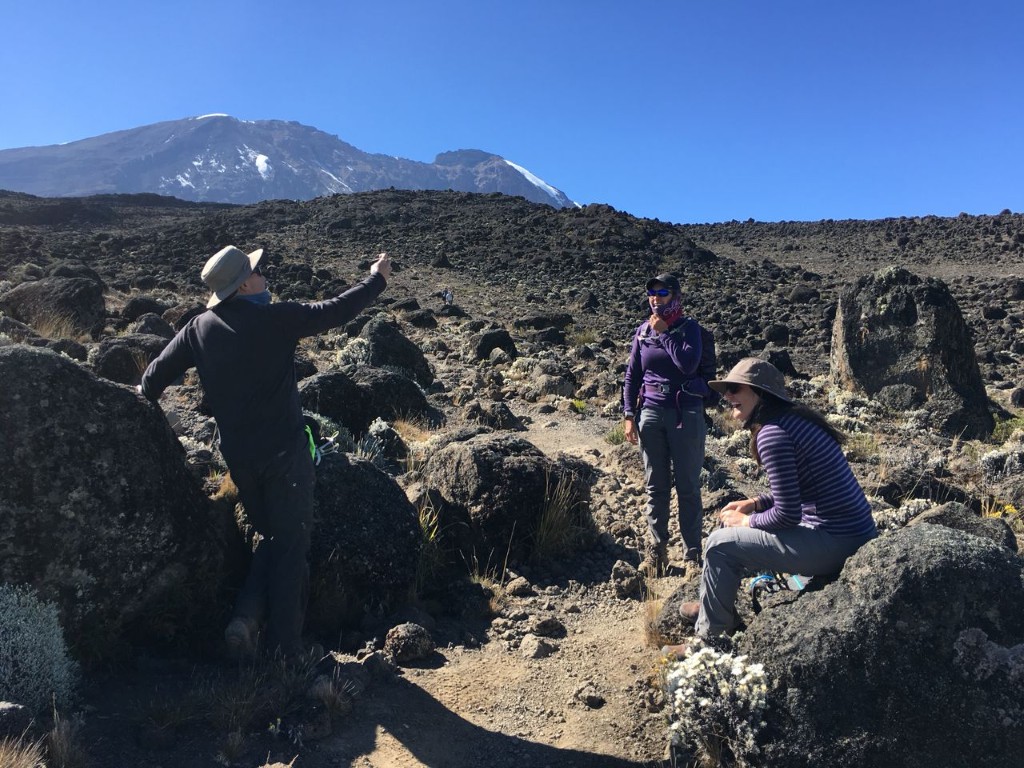
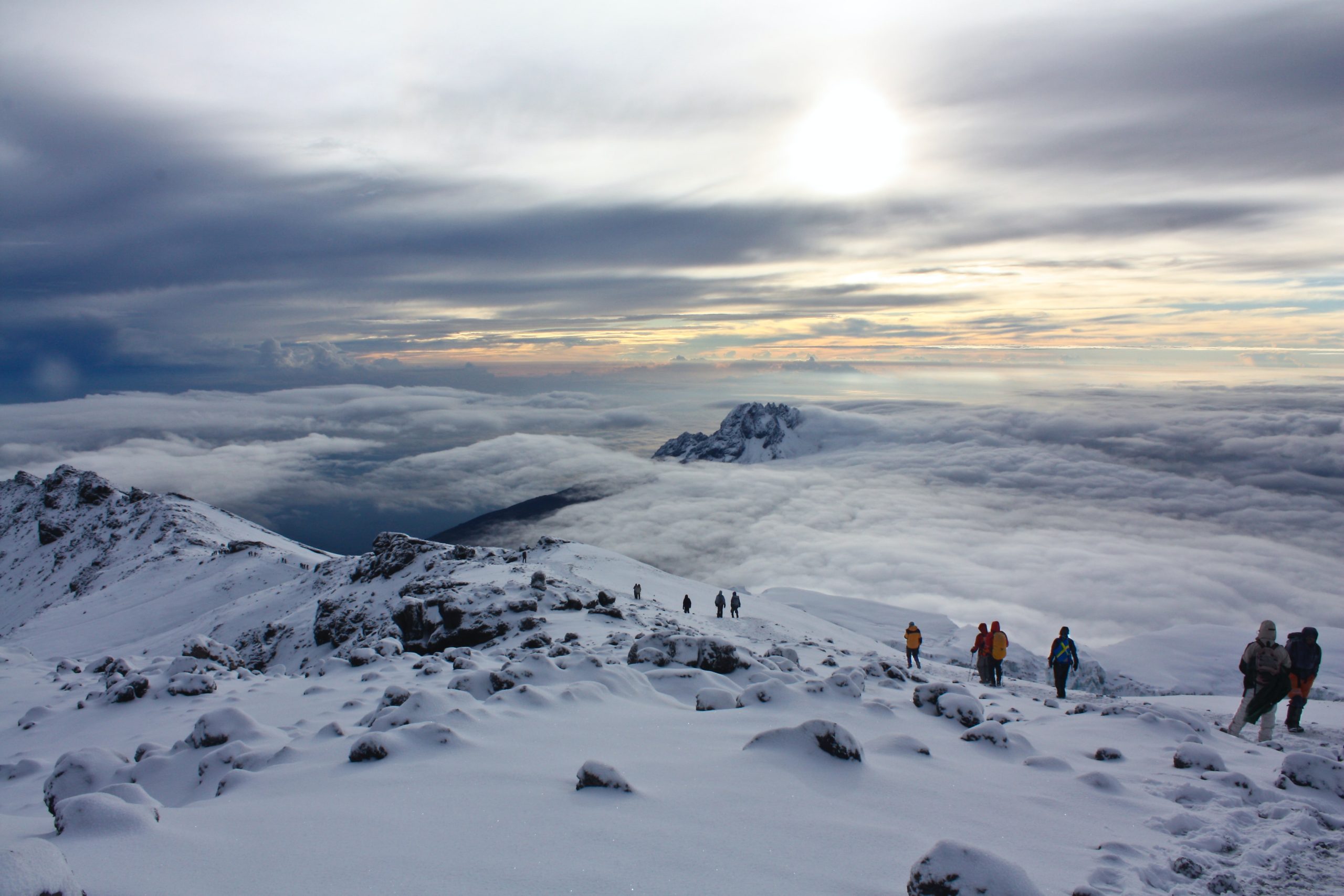
Moss balls tumble about and lichens encrust the rocks in symbiotic relationships between fungus and algae: living paintings in red, green and gold which persist up to the rocks of Kilimanjaro’s saddle area, formed almost three quarters of a million years ago by lava spilling over and between lower volcanic cones. From these great heights, there are superb views of the craters of Mawenzi and the snow-crowned summit Kibo.

When cloud clears from the forest below, you can see Mount Meru rising from the spreading plains more than 4000 meters beneath your feet.

This is the totality of the African highland holiday experience.

You may also see fabulous wedge-tailed Lammergeyers, spiraling to great heights on thermal currents to drop bones onto the rocks below, cracking them for their succulent marrow.

But even they cannot endure the altitude for long and return quickly to more sheltered haunts.

Zone Five - Arctic Ice Cap Summit Of Kilimanjaro

The pinnacle of your Kilimanjaro climbing tour with Uhuru Trails is your approach to the secondary peak, Mawenzi with awe-inspiring rock walls and dykes that demand the expertise of a skilled climber. The dykes are fantastic pinnacles of lava from which softer rocks have eroded. Cross the moonscape of the rock strewn Saddle with its mini parasitic cones to the gentler glaciated slopes of the summit crater Kibo.

In spite of the enervating effects of this high altitude from 5000 meters to 5895 meters coupled with the bleak apparent lifelessness of the grandeur before you, your heart will swell with pride as you confront the top of the world. Your last stop before the summit assault will be cold and uncomfortable, but, oh, the glory of the star-studded sky, simultaneously dwarfing your human stature and bestowing a sense of God-hood to match your hardihood and achievement.

On Kibo, there is no free water. It is locked into ice and porous rock. But life still exists in the form of helichrysums near warm, vaporous fumaroles in the cater and in lichens that grow so slowly they are likely to be among the oldest plants on earth, perhaps surviving thousands of years in these cryogenic conditions.

No one can survive in these arctic conditions for long, where searing hot sun by day presages freezing nights. The atmosphere is too thin to filter out radiation and oxygen is less than half that found at sea level. Nonetheless, a German local pastor, Dr. Richard Gustavovich Reusch, found a frozen leopard in the snow in 1926.

Reusch climbed Kili sixty five times during his life on planet earth. Incredibly, wild dogs have been seen historically ascending to the summit of Kilimanjaro. In 1962, five African wild dogs accompanied three explorers (Sir Wilfred Thesiger, Effata Jonathon and George Webb) to the summit, waiting until they had signed the assault book, then slipping away with apocalyptic speed.

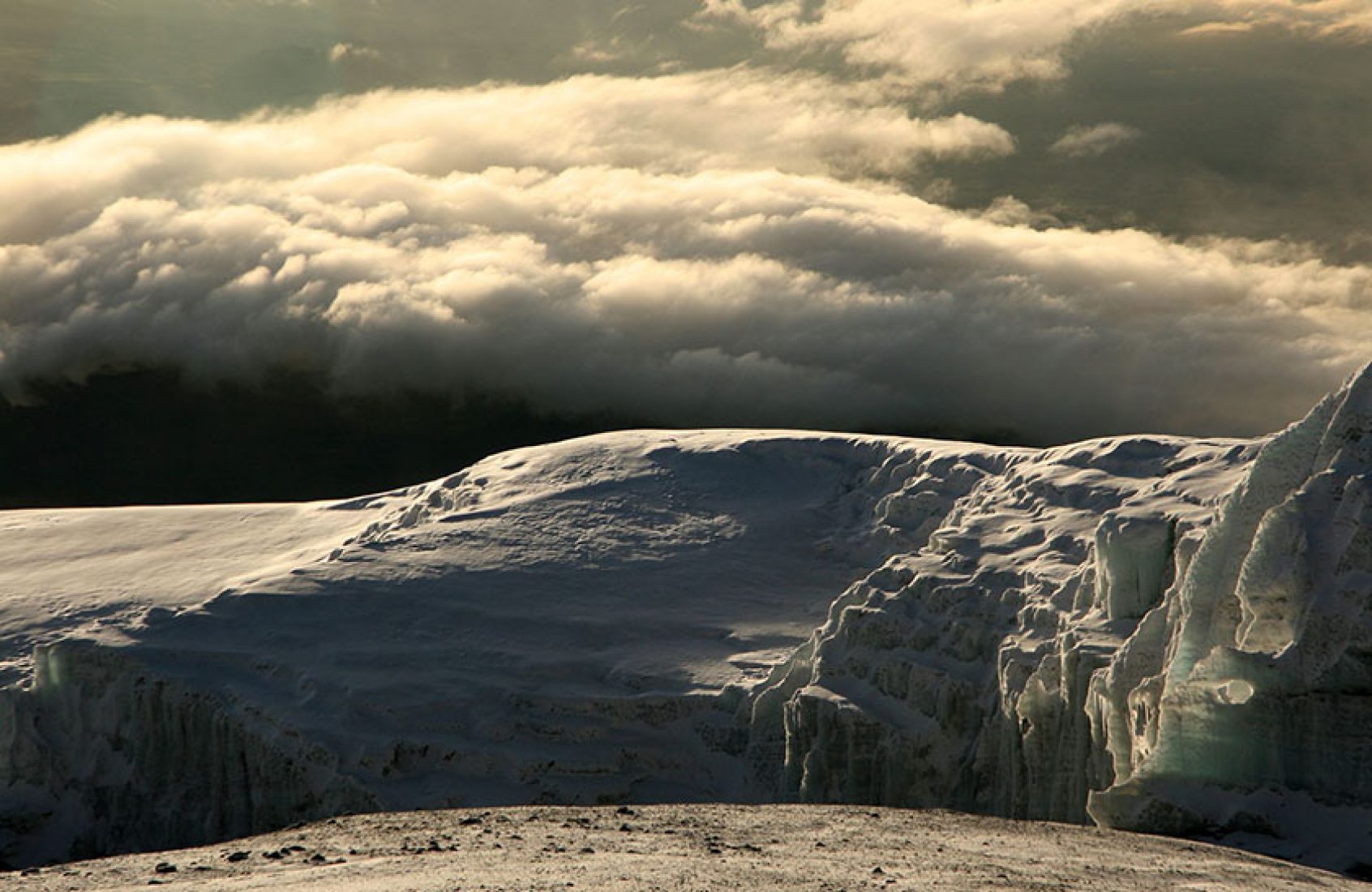
Ice cliffs ten meters high are all that remains of the retreating glaciers that once covered Kilimanjaro. Now you can look down 20 meters into the Inner Crater and 120 meters more to the bottom of one of the most perfect ash cones in the world. Yet even here, life triumphs in the form of bacteria in the boiling fumarole vents of a mountain that only seems to be asleep.
kili6f

Which is the best route to climb Kilimanjaro?

Kilimanjaro

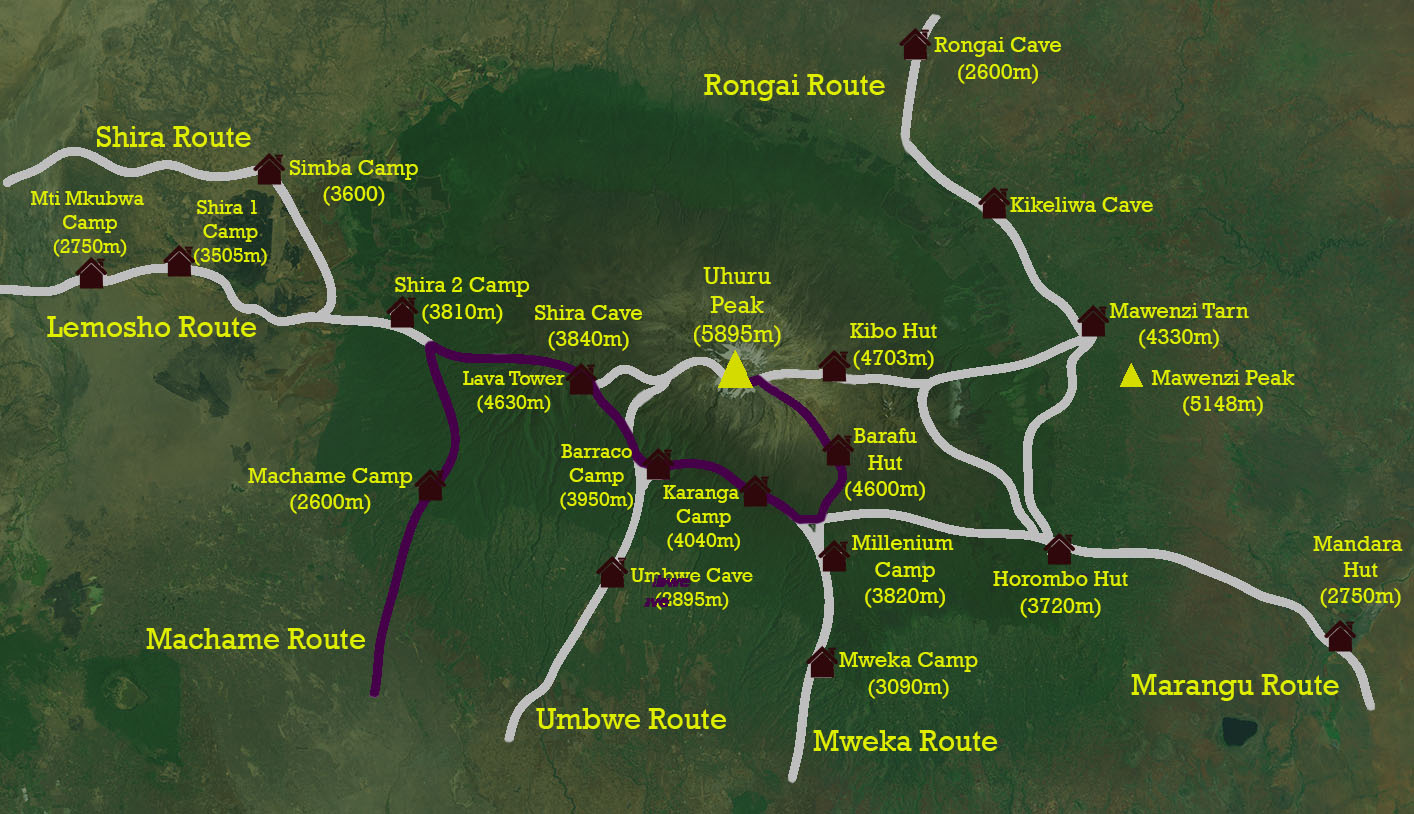
There are main six Mount Kilimanjaro climbing routes. These routes vary not only in length, cost and scenery; they also have different difficulty levels and different success rates. Selecting a Kilimanjaro climb route is one of the most important decisions you have to make. There is no single best Mt. Kilimanjaro climb route. Which route up Kilimanjaro is the best for you depends on several factors. The time and money you have available, previous experience and fitness, the time of the year, personal preference.

Below are the Pros and Cons of different Kilimanjaro Routes

Marangu route

  • This route is also known as the “Coca-Cola” route.
  • The only Kilimanjaro climb route that offers hut accommodation
  • The route is popular for its comfort while undertaking this classic trek.
  • Regarded as the least difficult of routes, Marangu is the most popular route on Kilimanjaro.
  • Gentle slope; It has a gentle slope for the first several days, prior to the tough summit attempt from Kibo Hut.
6 days marangu route Kilimanjaro climb

Lemosho route

  • Considered one of the most beautiful routes, the eight days trek itinerary allows for maximum time for acclimatization.
  • Improved chances of reaching the summit & allows time to enjoy variety of scenery in the different climatic zones.
  • The most beautiful Kilimanjaro climb route, but expensive
  • High Success Rate 98%
  • Allows climbers to traverse through various ecosystems, including rainforest, heath, and alpine desert.
  • Provides a higher chance of encountering wildlife, such as monkeys, antelopes, and elephants.
  • The route joins with the Machame route on the Shira Plateau and follows a similar path to the summit.

Umbwe route

  • Known as the most challenging and steepest route on Mount Kilimanjaro, it is recommended for experienced climbers.
  • Gets very muddy especially during the rainy season.
  • Offers a direct ascent with a shorter duration, usually completed in 6 to 7 days.
  • Provides a more secluded and less crowded experience compared to other routes.
  • Begins with a steep climb through dense rainforest, providing a unique and adventurous start.
  • Offers breathtaking views of the Western Breach and the Barranco Wall.
  • The route joins with the Machame Route at Barranco Camp and follows a similar path to the summit.
  • Requires good physical fitness and high altitude hiking experience due to its demanding nature.

Machame route

  • The most popular climbing route up Kilimanjaro
  • It has the richest forested area on the mountain.
  • Offers diverse landscapes, including rainforest, moorland, and alpine desert.
  • It provides ample time for acclimatization, increasing the chances of a successful summit.
  • The route offers stunning views of the Shira Plateau and the Western Breach.
  • Lush and beautiful, but also gets very muddy during the wet season

Rongai route

  • The Rongai route is a more gradual ascent and is therefore preferred by those with little or no backpacking experience.
  • The easiest route on Kilimanjaro, it is great with kids and for relatively older folks
  • Less traffic
  • Known for its remote and less crowded nature, it offers a more tranquil climbing experience.
  • Starts from the northern side of the mountain, providing different perspectives and views.
  • Passes through beautiful landscapes, including moorland and alpine desert.
  • Offers stunning views of the Mawenzi Peak, the second-highest peak of Kilimanjaro.
  • Highly recommended during rainy season as this route receives the least amount of rain due to its position on the mountain.

Northern Circuit route

  • The most popular climbing route up Kilimanjaro
  • It has the richest forested area on the mountain.
  • Offers diverse landscapes, including rainforest, moorland, and alpine desert.
  • It provides ample time for acclimatization, increasing the chances of a successful summit.
  • The route offers stunning views of the Shira Plateau and the Western Breach.
  • Lush and beautiful, but also gets very muddy during the wet season

Gear List

Kilimanjaro

Our comprehensive Kilimanjaro climb gear list will help you be the best type of climber, prepared with the right balance of essentials while maintaining a manageable bag weight.

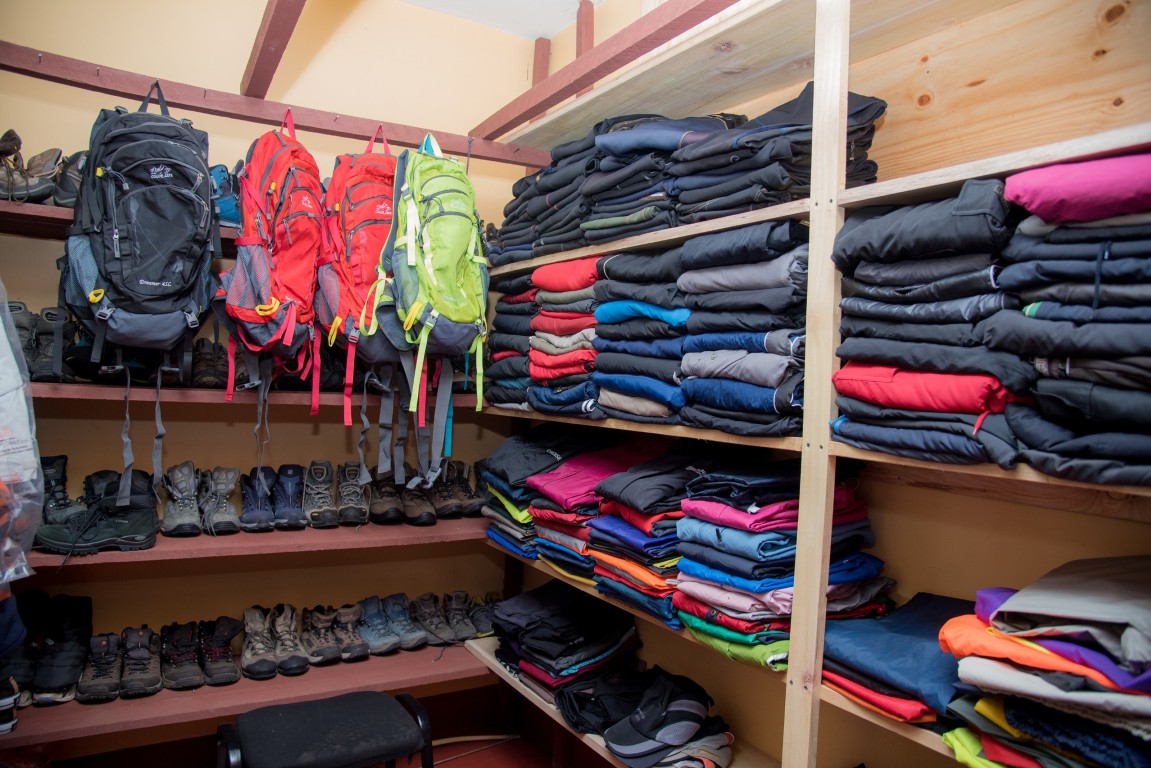
At Top Climbers, we rent out a large selection of equipment which is provided on arrival at the hotel. This includes sleeping bags with cotton liners, two sizes of duffle bags, 40L day packs, assorted sizes of dry bags, rucksack covers, trekking poles, waterproof tops and bottoms, gaiters, gloves and mitts, ponchos and umbrellas, and many more. All of it can be rented at very reasonable rates on your arrival. We can provide your our rental prices on request.

BAGS

Organized trips like our supported Kilimanjaro climbs come with a large team of people including guides and cooks, and porters to carry your main bag as well as tents, kitchen equipment, food, fuel, tables, and chairs and all you Kilimanjaro climb gear list. While this makes it easier for you to conserve energy and focus on reaching the summit successfully, it does mean that there is a weight limit to stick to.  It’s also important to be very aware of the welfare of porters during your climb, so not over-packing is key, and bags are the most essential items on your Climbing Kilimanjaro Gear List.

Main rucksack or duffle bag (70 litres)

Porters are not allowed to carry more than 20kg in total and this allowance needs to include space for their own belongings. So make sure your bag does not exceed the weight of 15kg.

The Chagga porters carry bags on their heads, so no hard cases, please.

We rent out the Highlander Lomond Bag which you can pick up in Moshi when you arrive. Note that these bags will go into another large sack which the porters carry, in order to protect your bag further from the elements

Day pack (30-40 liters)

This is the bag you will carry every day on your back, so make sure it has room for essentials such as water bottles, spare layers, waterproofs, cameras, etc. We rent out the Vorlich 40L day pack which has its own rain cover and is perfect for a trip like this.

Dry bags / tough poly bags

Make sure all your contents are wrapped in waterproof bags to keep them dry. Use them also to store used clothes during the trek. We have various sizes for rent.

Waterproof bag covers

We will put your main bag into additional waterproof sacks in case of rain but make sure you bring a cover for your day pack which we also rent out.

Travel bag

Bring one other bag or case to leave in the hotel with your travel clothes inside. Some people use this as their hold bag and then transfer the Kilimanjaro clothes and kit to a rented duffle when they arrive.

SLEEPING EQUIPMENT

On your Climbing Kilimanjaro Gear List, make sure a sleeping bag is packed. Your choice of the sleeping bag and sleep accessories will depend on your personal needs and preferences.

Sleeping bag

3 Season sleeping bags are sufficient for the warmer months but if you get cold easily, especially during the colder months around October through the new year it’s better to upgrade to a 4 season sleeping bag or use a 3 season bag with a fleece liner. We rent out sleeping bags which are 4-season bags rated to minus 5C, which come with cotton liners to keep the bag clean.

Sleeping bag liner (fleece/silk)

Liners provide added warmth and a good fleece one will convert a 3-season bag to a 4-season bag. Silk is also warm and less bulky. We also recommend a cotton liner to keep your sleeping bag clean.

Sleeping pads/mats

These are not required for Climbing Kilimanjaro Gear List, but are an option for those who desire extra insulation for their sleeping bag. The foam mattresses we provide do work, but obviously, an extra layer of insulation is that much warmer and more comfortable. Inflatable Thermarests or lightweight Exped mats are fine but they tend to slide over the mattress, so a closed-cell camping mat is actually the best.

Travel pillow

Pillows are very useful and the soft ones are easily packed small, or else make a pillow out of your clothing.

Sleeping clothes

You are likely to want to go to the toilet at night and wear something in the sleeping bag, but keep it lightweight and not too tight. Remember sleeping bags are designed to work best without wearing layers or socks, but a T-shirt and leggings or thermal bottoms will be fine to pack on your Kilimanjaro climb gear list. If you do get cold then put your day sack between the end of the sleeping bag and the tent wall, and wear a hat.

CLOTHING

Due to Kilimanjaro’s altitude, the mountain creates its own micro-climate above the cloud level which is cold and very changeable. You are exposed to the elements at all times and your body will experience quite a big daily temperature range, from 18°C in the rainforest to minus 5°C on the summit, which can easily be lower with the wind. Having the right clothing in your Climbing Kilimanjaro Gear List is essential and the trick is to use a system of layers that can be added or removed as conditions change. Every day will require a slight change to your clothing, adding warmer layers, gloves, and hats as you go higher.

Waterproof/ windproof jacket and trousers

Choose a breathable outer ‘shell’ layer like Goretex on your kilimanjaro climb gear list as this will help to wick out any moisture and keep you dry inside. Make sure it has a hood and that you can fit your other layers of fleece and lightweight down underneath comfortably.

A down jacket or a thick fleece

A down jacket or a thick fleece is essential for summit night and for the evenings. If you take a lightweight down jacket then you will probably need a fleece jacket as well (plus the outer shell over the top). Remember that synthetic down remains warm if it’s damp or wet and is probably the better option.

Mid-layer fleeces/jumpers

You will need a mid-layer fleece or equivalent jumper for use over T-shirts and under the jacket. One or two will be enough.

Base layer

Base layers or thermals are lightweight and add a vital warm layer on cold evenings and summit nights. Women bring leggings too which are also good for the first few days of walking.

Trekking trousers/shorts

Good quality walking trousers, preferably made of a quick dry material. Remember cotton does not dry quickly and jeans are not good for mountain hiking. Many trekking trousers have zips to convert into shorts or take a separate pair of shorts for the forest stage. One or two pairs will be enough.

Trekking tops/ t-shirts

Two or three trekking shirts or tops for the first few days, avoiding cotton. T-shirts and sports tops also work but will probably need a fleece layer on top for when you stop. Choose short or long-sleeved.
Underwear

It’s best to have a clean pair every day. Cotton will get damp and uncomfortable so opt for synthetic or merino wool and remember a dry bag to keep used clothes inside your duffle. Merino is a natural fiber that is naturally odor-resistant, moisture-wicking, insulates when wet, and dries fast. It is soft and comfortable against the skin and not too hot in warm temperatures. Synthetic (mix of nylon and spandex) is also soft, comfortable, breathable and fast drying, and cheaper than merino. Consider a fitted style like hipster or bikini briefs that won’t ride up or chafe. For men, the same principle applies, and best to avoid loose shorts which can bunch up.

Insulated gloves/ liner gloves and mitts

Fleece gloves, preferably with a waterproof outer, and thin inner gloves are both essential on kilimanjaro climb gear list for climbing Kilimanjaro, but on summit night a pair of mitts are best for keeping hands warm. We rent out waterproof gloves and fleece gloves.  

FOOTWEAR

Looking after your feet is important for mountain climbs. The right care and preparation will save you from pain and blisters, so cut your nails before setting off and keep your feet clean and dry. Foot talcum powder is quite good too but remember to wash it off at the end of the day. Take some blister pads just in case and change socks every day.

Walking boots

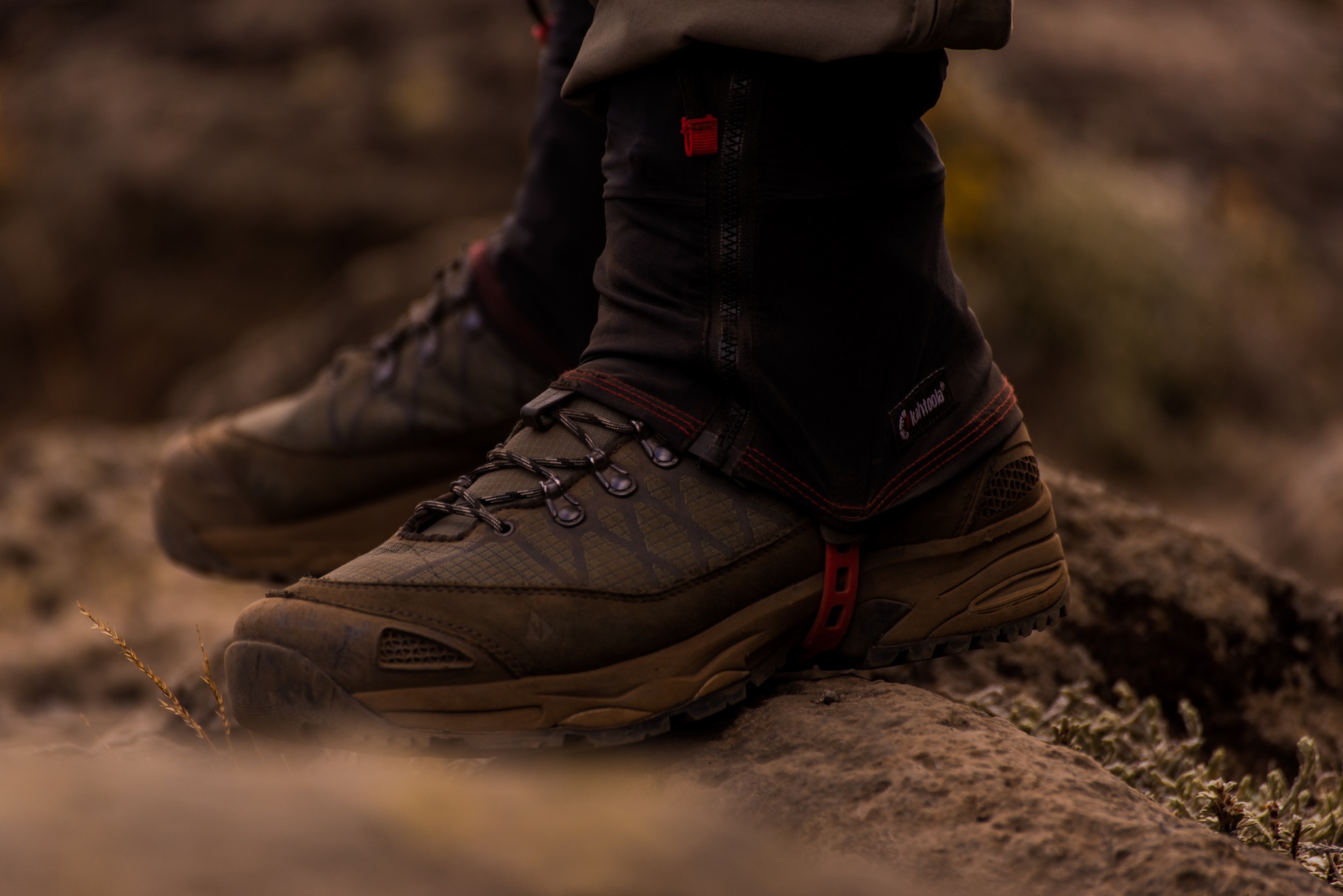
Leather boots are best, make sure they are well covered in dubbin to keep the water out. Fabric boots will get wet if it rains heavily but the Goretex-lined ones will stay dry in a shower. Boots should have proper ankle support and a stiff midsole so the boot doesn’t bend too much. You can read more about boots in our trekking boot guide. Remember also that your feet will swell at altitude and after days of walking so check first that you have some space for movement at home with your summit socks on.

Spare laces and footbed

The terrain is quite unforgiving on Kilimanjaro so do bring spare bootlaces. Also if your feet do get damp then one option is to put in a spare dry footbed the next morning.

Trekking socks

Trekking socks for the early days will be fine – one pair per day for the first 5 days- but for the summit night a woolen mix is warmest, but check they fit comfortably in your boot with no tightness. Socks can be long or short.

Camp footwear

Change out of boots when you get to camp and let them air out. Bring a pair of camp shoes such as trainers or lightweight walking shoes or sandals. You will also use these for toilet visits at night.

HEADGEAR / EYEWEAR

We lose half of our body heat through our heads, so keeping your head warm while trekking Kilimanjaro is essential. On the flip side, there’s also the risk of sunstroke and sunburn with the intense UV rays at high altitudes.

Buff® / scarf

The Buff® is ubiquitous on treks and climbs and is very useful to protect the face from sun and dust and wind. They can be made of stretchy thin material or fleece. You can use a scarf or snood equally well.

Sunglasses

Eye protection is vital, as the UV rays are particularly strong even in clouds. UV400 sunglasses are a must and try to take a pair that have side protection. Be careful of prescription glasses that change color, they normally do not provide enough UV protection and the lenses often aren’t big enough to prevent the rays from getting into the eyes.

Wide-brimmed sun hat

One of the biggest risks of climbing Kilimanjaro is exposure to the sun and possible heat stroke through the top of the head. A sun hat must be worn at all times if it’s sunny and if it has a brim all the better to protect the back of your neck.

Insulated hat

When the weather turns cold you’ll need to keep the heat in your body with a warm thermal hat. Make sure it covers your ears and isn’t too tight.

Ear plugs

Optional for music fans who like to zone out to their favorite album or doze off to podcasts at night, but also very useful against the noises of other hikers who snore.

Contact lenses

You can wear contact lenses on Kilimanjaro without any problem, the altitude and low pressure will not affect the fit of your lenses. The biggest issue is hygiene and handling the lenses in a tent, and also dryness of the eye caused by the wind and dry air. Dailies are easier but take saline drops as well as your usual cleaning liquids, and your glasses.

PERSONAL HYGIENE

There are no permanent showers or bathing facilities on Mount Kili, but a bowl of hot water is available at camps for washing your face and hands. For larger groups, we can provide a shower tent with a bag of water warmed up by the sun. You can also ask the guides to provide a bowl of hot water for a wash in your tent.

Wash kit

Toothbrush and travel-size toothpaste smell bar or bottle of soap, preferably biodegradable. (we do provide soap for hand washing at the camps). Lifeventure offers a range of travel soaps in small bottles.

Dry shampoo is useful, we recommend Batiste travel-sized cans

Nail brush – a lot of the campsites are muddy and dusty

Small hair brush – your hair will get matted and tangled

Face flannel – quick dry travel towel material small towel – one for perspiration and another for drying face and hands. Bar towel size.

Hand sanitizer gel

Moisturizing cream – your skin will get very dry in the thin air at altitude. Coconut oil is hydrating and anti-microbial natural Skin Care for cracked hands and feet, insect bites, sunburn, or blisters, Green Goo is an excellent plant-based salve

Face wipes – preferably biodegradable, we recommend Simple or Rawganic or re-usable ones like Helen Round

Lip balm with SPF25 protection

Carmex is excellent deodorant – natural aluminum-free brands include Crystal, Native, Each and Every. Crystal is a salt-based stick that kills the bacteria that make you stink without all of the nasty stuff that is found in chemical-based deodorants.

Tweezers, cotton buds

Travel pack extras for men:
A small mirror, razor, and shaving cream – Elemis shave gel has aloe vera and witch hazel to help with your skin after a day in the sun and wind

Pee bottle – useful but takes some practice, use hard plastic bottle well marked.

Extras for women:
Pee cloth is useful, we recommend Kula cloth.

Feminine wipes – a natural wipe like Swipes Lovin Wipes, Goodwipes, or Rael.

Menstrual cup – these silicone cups can stay in for up to 12 hours without odor or discomfort and are reusable. OrganiCup is certified​ ​hypoallergenic​ ​and​ ​toxin-free

FIRST AID

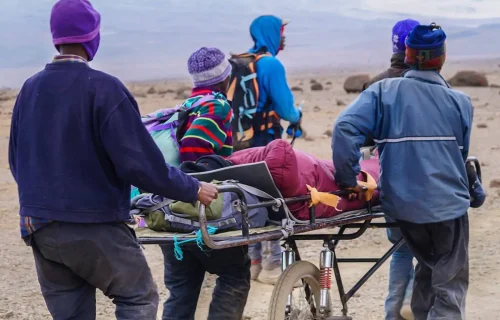
The guides carry an extensive first aid kit, a mountain shelter, oxygen bottles, a mask, and a stretcher on every climb. However, on your Climbing Kilimanjaro Gear List, You should still carry a personal first aid kit for minor complaints.

Personal medication

Anti-malarial tablets (you don’t need to take these on the mountain as there are no mosquitoes up high),  a general antibiotic for a bacterial infection, Immodium or Lomotil for diarrhea, inhalers if you use them, and painkillers for headaches (Tylenol, ibuprofen for example). Also, take throat pastilles for the inevitable dry throat.

Altitude drugs

We have these in our medical kits and our guides know how to diagnose and administer them, but you may want to bring your own. These are prescription drugs and they do have side effects. There are three drugs that are used for high altitude sickness and it is vital you read the information we provide about each of them. Diamox (acetazolamide) is the most commonly known and it does help as a preventive treatment for Altitude Mountain Sickness but only if mountaineering principles are followed, namely keep a slow pace.

Dexamethasone is effective for preventing and treating AMS and HACE and prevents HAPE as well. And nifedipine, by reducing pulmonary arterial pressure, is effective in treating HAPE (pulmonary edema). Please note that in the case of serious altitude sickness the guides will effect immediate descent, night or day, and use all the facilities at their disposal to get a person to safety, including a helicopter service, rescue cars, stretchers, and a well-established Ranger network.

Oral rehydration sachets

Essential for replacing the salts in your body that are lost whilst hiking and getting dehydrated at high altitudes. Nuum is a tablet that you mix with water to help with salts and energy.

Plasters, bandages, and zinc oxide tape

Plasters will be very useful for any cracked skin and small cuts, and a bandage with tape for something worse. Compeed blister pads for your feet, plus a good quality tape to cover over hot spots if necessary.

Antiseptic cream and wipes

For small cuts and grazes. Keep small wounds clean and when possible air them out.

Eye drops

Dry tired eyes are common and eye drops are very useful, or a small eye bath. Dust can get everywhere too, so the drops can help with irritation.

Sun cream

Sunburn is a serious risk at high altitudes, so make sure you bring a strong factor of sunblock. To avoid having to reapply, choose a long-lasting, waterproof one. P20 is a good choice that doesn’t run.

MISCELLANEOUS

Water bottle

Make sure you have a bottle as you’ll need to stay hydrated. Platypus or camelbacks are fine too, but the tubes may freeze on summit day and must be insulated. Note that disposable plastic bottles are now illegal on Kilimanjaro and will attract a fine from the Rangers.

Flask

On summit night you will want a hot drink to keep warm and hydrated. The guides carry large thermos flasks but you may want to bring a half-liter or one-liter flask of your own. We rent these out.

Umbrella

These are very useful on the first day in the forest if it is raining hard and too hot to wear waterproofs, and on the second day if there is no wind. Higher up on windless sunny days, they are again useful. We rent out large-good quality umbrellas.

Trekking poles

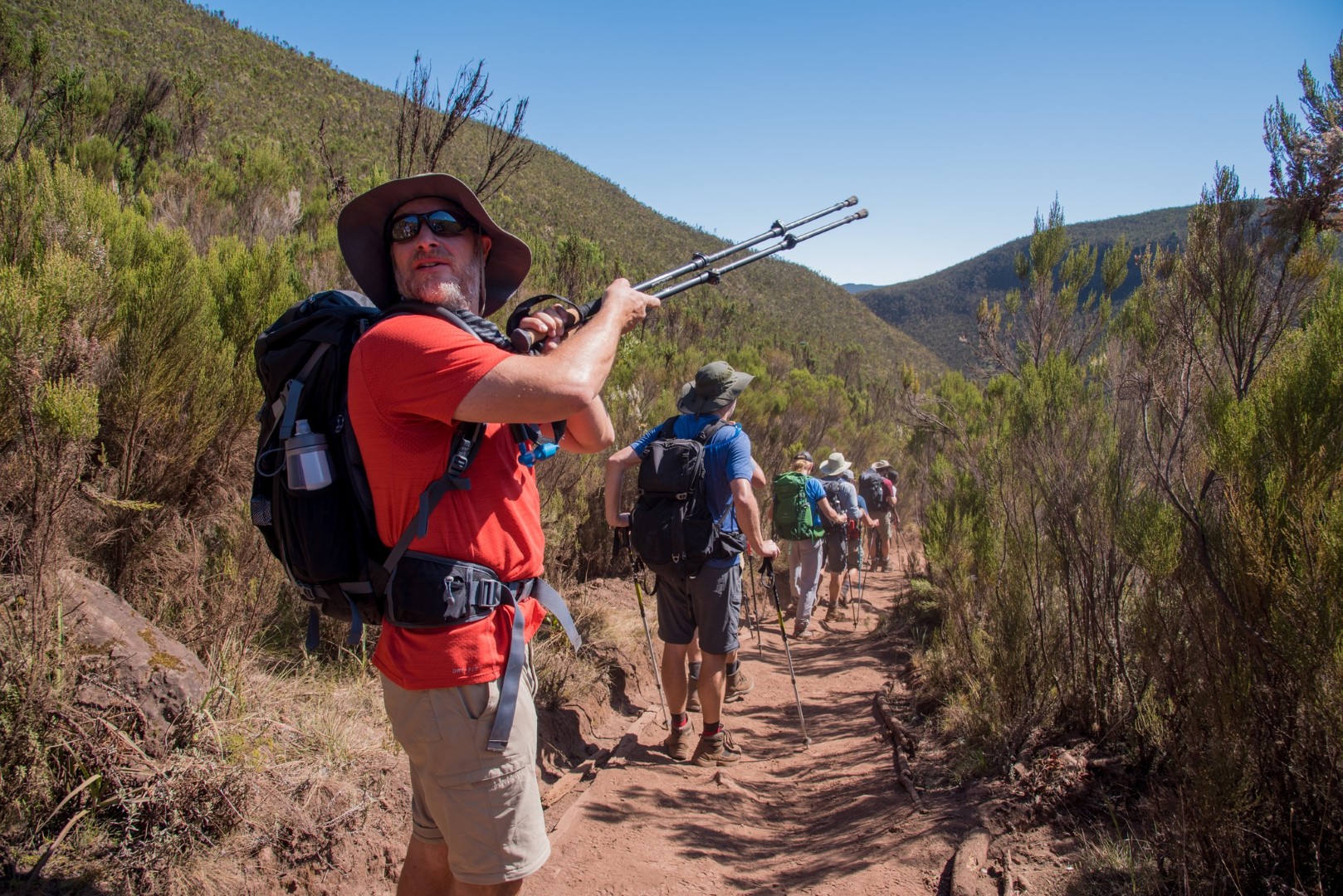
These are very useful but especially for the descent which is on loose scree. Anyone worried about their knees should take a pair, preferably with suspension. We rent out poles from Moshi.

Hand warmers

Ideal for those who have poor circulation or get cold easily. The charcoal ones that react with oxygen don’t work as well because of the high altitude and lack of oxygen in the air, but they are certainly useful for your hands inside your mitts on summit night.

Microfiber travel towel

Lightweight and dries quickly. Optional.

Toilet roll

We do provide toilet rolls but you may wish to include your ownas well on your kilimanjaro climb gear list. If you do then please bring recycled toilet paper and keep it in a plastic bag.

Mosquito repellent

There are almost no mosquitos on Kilimanjaro due to the height above sea level. However, there are mosquitos in Tanzania so repellent sprays are recommended for when you first arrive and finish descending on your Gear for Climbing Kilimanjaro.

Book/games

There will be time to relax in the evenings, so include a book or kindle, a deck of cards, or a small games on your kilimanjaro climb gear list.

Padlock

The best padlocks are protected by a security code rather than a key.

Plug adaptor (2-pin round)

Look for the type G plug adaptor to use in the hotel in Tanzania.

DOCUMENTS

Passport copy

Don’t forget a photocopied version (and also a photo on your phone) in case of loss/theft.

Yellow fever certificate

This is only needed for entering Tanzania if you are coming from or via a country where there is yellow fever, for example, if you visited Kenya beforehand.

Travel insurance details and policy certificate

Keep a paper copy as well as a digital copy in case you can’t access your phone.

Money (US$)

Make sure you include cash on your Kilimanjaro climb gear list as well as credit cards. The hotel takes cards for paying your bar bills, and in the town, you will spend mostly Tanzanian shillings. You can change sterling or euros but US dollars are most common.

Flight details

Keep a paper copy because airport security like to see it when you enter the airport on the way home.

Kilimanjaro Travel Information

Kilimanjaro

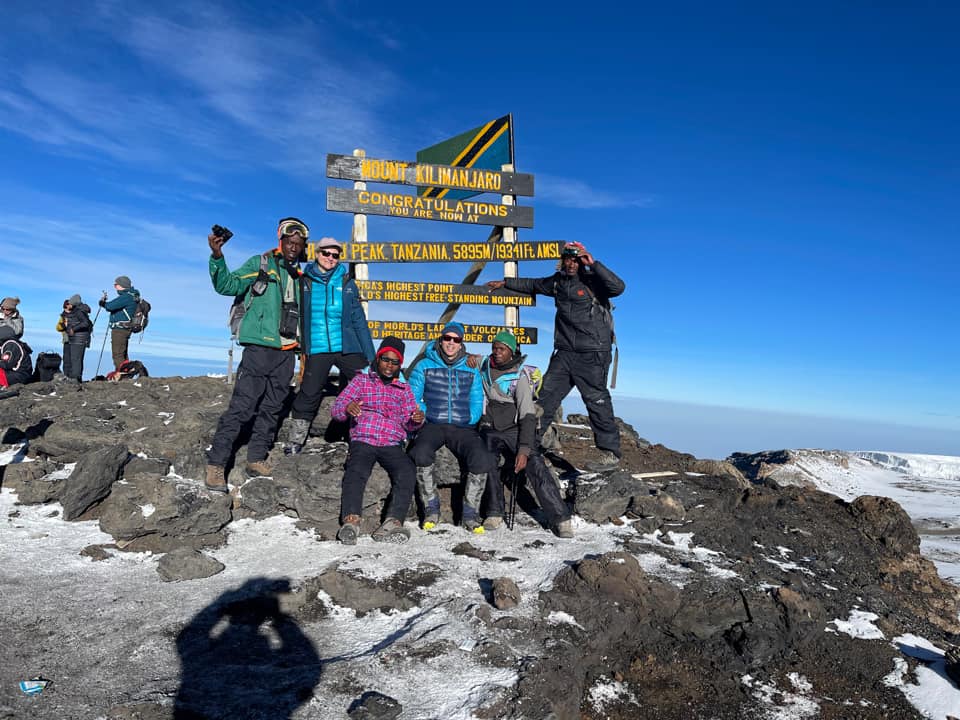
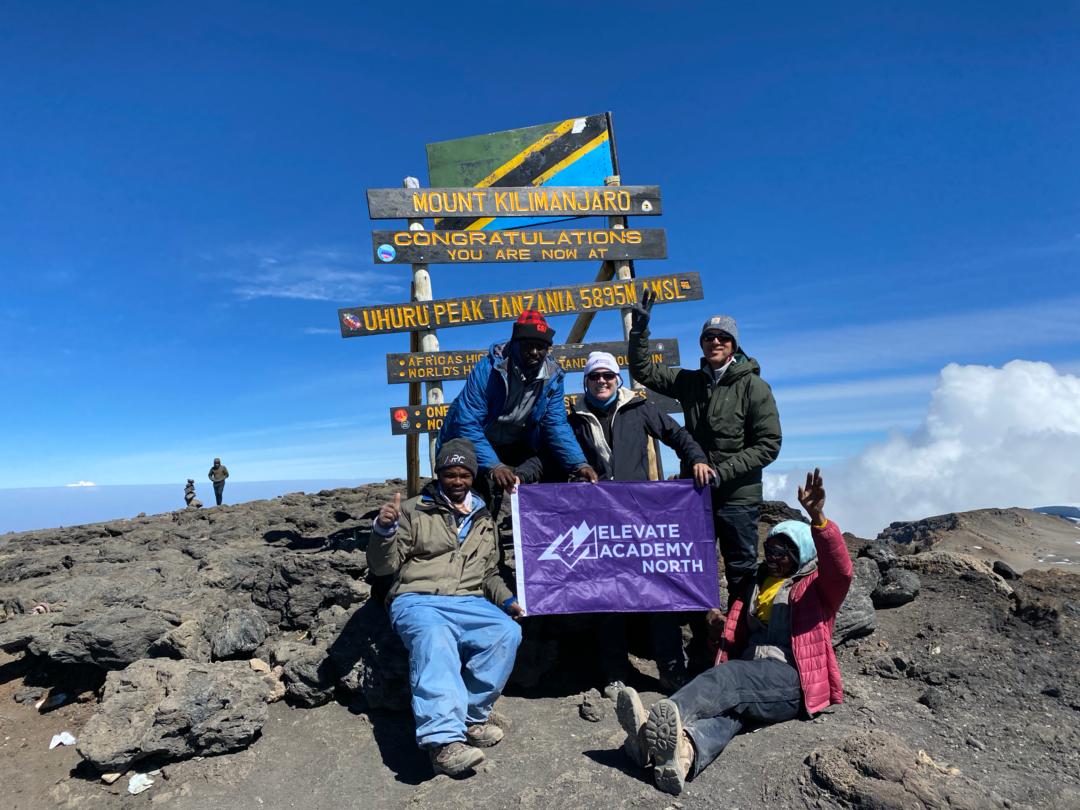
Join us on a 5 to 10 day exclusive, fully supported and professionally guided climb of Mt Kilimanjaro in Tanzania, Africa. If you’re an avid adventurer, Mt Kilimanjaro is one of those adventures that should be ticked off your bucket list. Climbers walking above the clouds on Kilimanjaro Picture this. You’re 5,895 metres high and standing on the ‘Roof of Africa’. You’re just about to take your final steps onto Uhuru Peak, the summit of the world’s highest free-standing mountain — the beautiful majestic Mt Kilimanjaro. As you reach the summit, the memories, the challenges and tribulations of the past seven days come flooding back and culminating in one euphoric emotion. At that moment, the feeling of achievement and success in reaching your summit goal is almost overwhelming – you feel alive! For the past seven days, you have experienced many emotions as you battled and pushed through new personal, physical and mental barriers. Having climbed Mt Kilimanjaro, it is impossible not to be changed by the experience positively – you will go home a new person. You uncovered much more about yourself, your personal strengths, and your limitations on the journey. Climbing Mt Kilimanjaro is not just about reaching the summit. It is a journey of self-discovery from the day you commit to doing it to the day you return home; the memories and the experience will last a lifetime.

Kilimanjaro Mountain

Crowned by eternal snows, the mighty Kilimanjaro (19,340 ft.) is the highest free-standing mountain in the world and dominates its landscape unlike any other mountain. Located in Tanzania, this dormant volcano looms over five ecosystems and large game reserves, and is certainly one of the world’s most impressive sights. The terrain is nothing short of dramatic. As a mountaineering company, we treat this adventure as a mountain climbing expedition.  Kilimanjaro is unique in many ways, but stands as the only one of the seven summits (the highest points on each continent) that is truly a nontechnical climb. Using well-marked trails to the summit along with our expert guide staff, a fit enthusiast has an excellent chance of reaching the summit. The combination of our expert guides, choice of routes, success and safety has set Top Climbers apart from our peers. We invite you to review the “Why Climb With Us?” section below. Kilimanjaro is an attractive climb for anyone interested in a physical challenge: climbers, wilderness enthusiasts, and hikers alike. We consider the Kilimanjaro climb and safari expedition to be one of the most appealing and treasured adventure experiences we offer. Following your climb, we can also take you on a safari to the spectacular game parks of Tanzania, Ngorongoro Crater, The Tarangire River and National Park, and Serengeti National Park. Throughout the safari, we lodge in great hotels and travel by Land Cruiser across the Great Rift Valley, following wildebeests, lions and other indigenous wildlife. More details can be found in our Safari Overview page and on our Itinerary pages.

The world’s most accessible high summit

Mt Kilimanjaro is a beacon for visitors worldwide. Most climbers reach the crater rim with little more than a walking stick, proper clothing and determination.

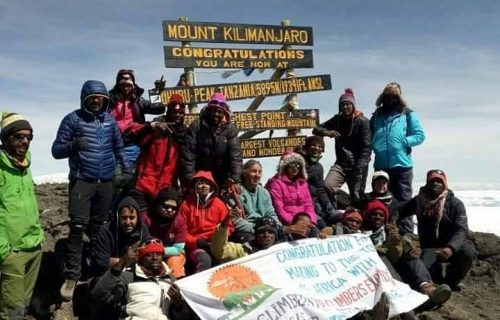
And those who reach Uhuru Point, the actual summit, or Gillman’s Point on the lip of the crater, will have earned their climbing certificates.

And their memories.

But there is so much more to Kilimanjaro than her summit. The ascent of the slopes is a virtual climatic world tour from the tropics to the Arctic.

Explore Diverse Geography and Nature

Even before you cross the national park boundary (at the 2,700m contour), the cultivated foot slopes give way to lush montane forest, inhabited by elusive elephants, leopards, buffalo, the endangered Abbot’s duiker, and other small antelope and primates.

Higher still lies the moorland zone, where a cover of giant heather is studded with otherworldly giant lobelias. Above 4,000m, a surreal alpine desert supports little life other than a few hardy mosses and lichen.

Then, finally, the last vestigial vegetation gives way to a winter wonderland of ice and snow.

Choose Your Route

With our expeditions, you have the flexibility to select from a variety of routes to suit your budget, preferences and capabilities. Whether you opt for the popular Machame Route, the scenic Lemosho Route, or the challenging Umbwe Route, our experienced guides will ensure a safe and fulfilling journey.

Read more about the different routes here.

Why Top Climbers?

feeling-excited-at-the

Unparalleled Service and Support

As a 5-star rated company with years of experience, we are dedicated to providing you with exceptional service from start to finish. Our friendly and professional team will be there to assist you throughout your Kilimanjaro trekking adventure, ensuring that all your needs and expectations are met.

283778416_5096501770426182_4216230523846614383_n

Great Camping Facilities

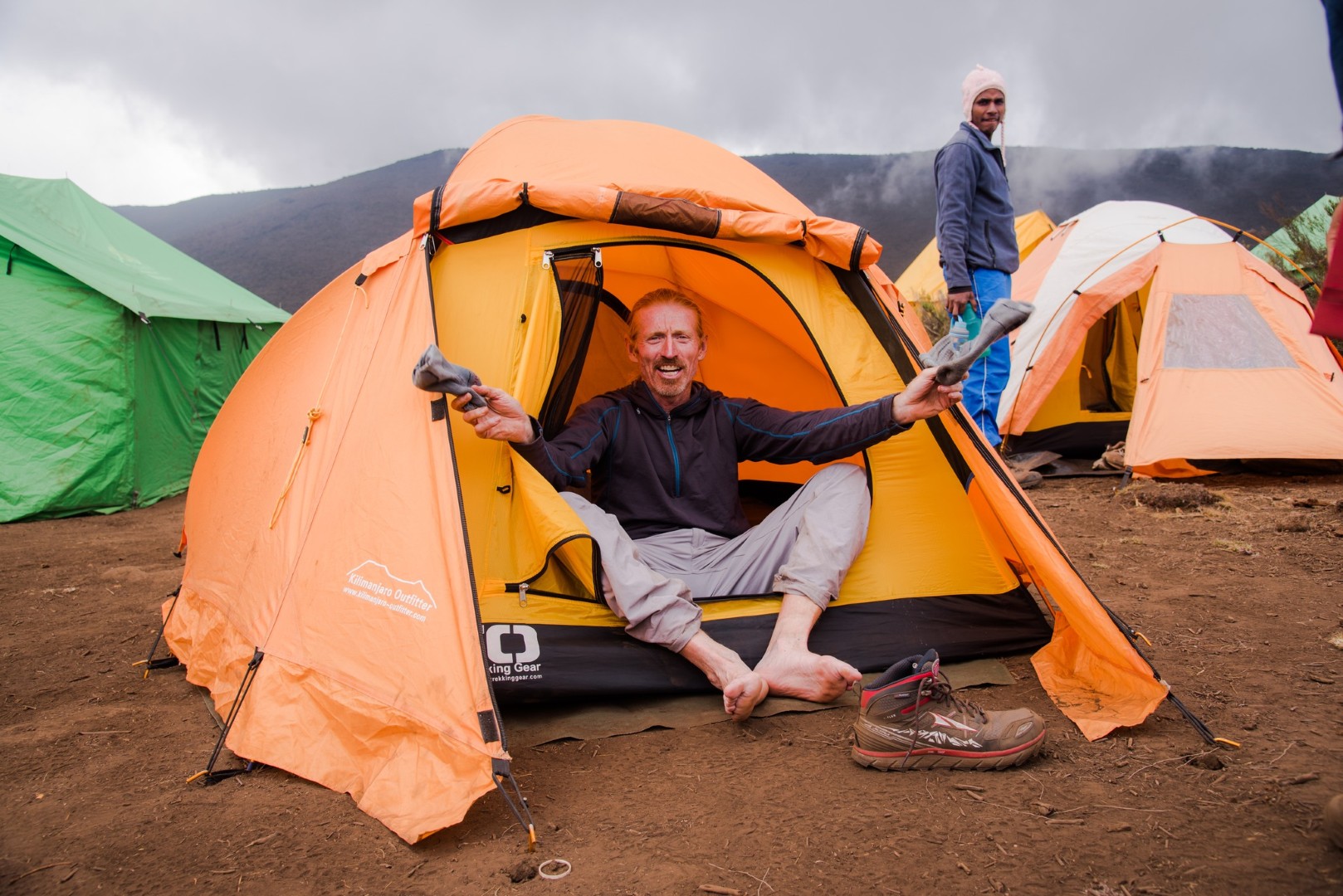
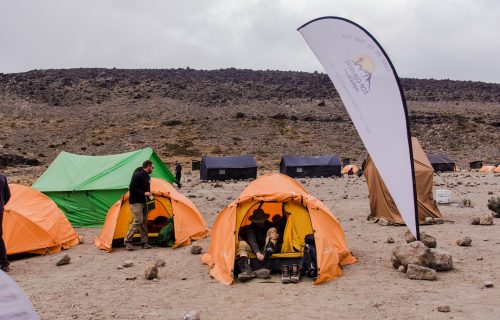
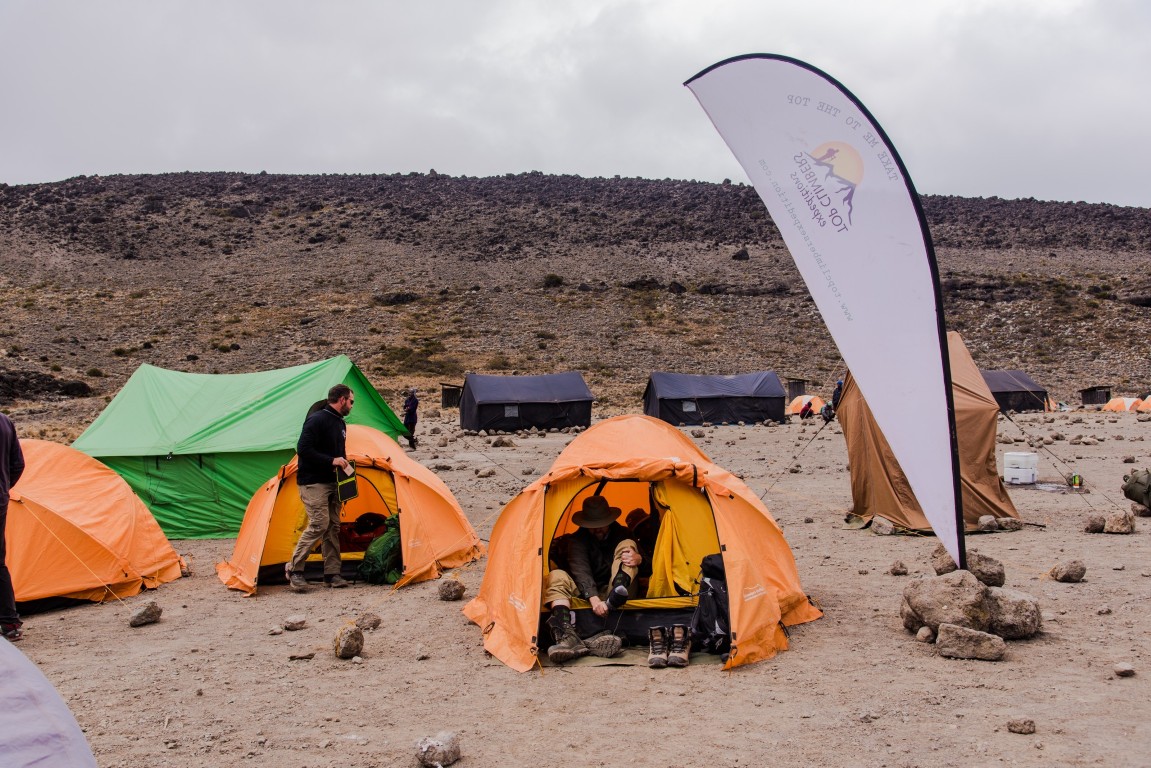
Experience the utmost comfort during your trek with our top-of-the-line camping equipment. Our tents are spacious, weather-resistant, and designed to provide a cozy and secure resting place after a challenging day of hiking. We prioritize your comfort and well-being, allowing you to relax and rejuvenate amidst the awe-inspiring landscapes.

sleeping-bags

High-Quality Equipment

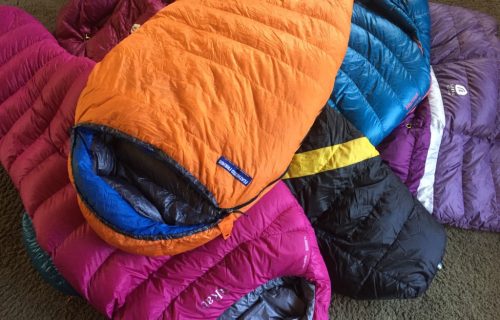
We provide you with the best equipment available to ensure a safe and enjoyable trek. Our camping gear, including sleeping bags and mats, is meticulously maintained and regularly inspected. Additionally, we equip you with appropriate gear for varying weather conditions, ensuring that you are prepared for any situation that may arise.

tour-via-lemosho-route

Delicious and Nutritious Meals

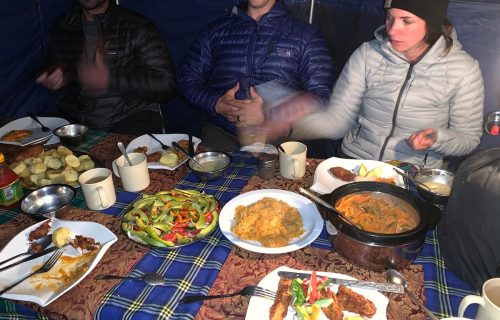
Our experienced camp chefs will prepare delicious and nourishing meals to fuel your body for the demanding trek. You can expect a wide range of dishes made from fresh and locally sourced ingredients. We cater to dietary preferences and requirements, ensuring that you are provided with satisfying meals that accommodate your needs.

water

Adequate Water Supply

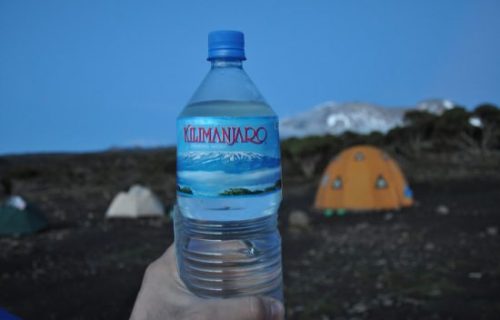
Staying hydrated is crucial for your well-being during the Kilimanjaro trek. We provide an ample supply of clean and safe drinking water throughout the expedition. Our guides and support staff will ensure that you have access to fresh water at all times, helping you stay hydrated and maintain your energy levels.

pulseox

Health Checks and Altitude Monitoring

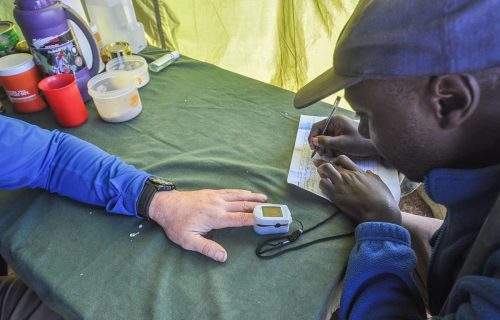
Your safety is our utmost priority. Our experienced guides conduct regular health checks to monitor your well-being and ensure a safe ascent. We pay close attention to symptoms of altitude sickness and provide necessary assistance and guidance. With our knowledgeable team by your side, you can focus on the trek, knowing that your health is closely monitored.

private-toilet-in-kilimanjaro-1462

Private Toilets

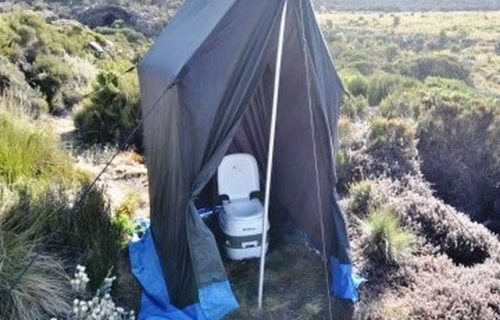
We provide private toilet tents for our clients on all of our climbs. Private toilets consist of a portable plastic toilet and a privacy tent. These will be set up at each campsite. Our staff (a designated “toilet porter”) maintains the toilet tent to make sure it is clean and ready for use.

evacuate

Safety and Evacuation Procedures

All our guides are certified Wilderness First Responders, and their high mountaineering training goes far beyond the normal scope of just this wilderness specific first aid. They are trained to identify and carefully monitor developing high-altitude issues and discuss them with you continuously. They know exactly when to bring you down the mountain, the quickest route to take and when to call for emergency evacuations with chopper/vehicle.

porters

Respect for Our Team

We are nothing without our team of guides and porters.  And we’re committed to paying and treating the porters on all of our climbs in accordance with industry best practices.

FAQs about Climbing Kilimanjaro

The main weather conditions that can cause concerns while climbing Kilimanjaro relate to cold temperature and precipitation. Though the average temperatures on the lowlands of Tanzania are relatively warm and stable throughout the year, the temperature on Kilimanjaro varies widely depending primarily on the altitude.

The dry seasons of mid-June through October and December through the beginning of March are the best times to climb Kilimanjaro. But even during the “dry” seasons, climbers may still experience heavy rains. The mountain’s weather is unpredictable and climbers should be ready for wet and cold conditions no matter when they come.

There are distinct climatic zones on different altitudes with changing vegetation. We will pass through five major ecological zones on the way to the summit. This varies from agricultural zone, Rain forest zone, Moorland zone, highland desert zone and arctic zone. As we gain altitude, the temperatures drop as does precipitation levels and vegetation. While the temperatures in the rainforest are generally very mild, averaging 21 degrees Celsius, the temperatures during the night ascent to the summit can be below zero up to -18 degree Celsius. Therefore, climbers need to have the appropriate extreme cold weather gear to endure harsh winter weather for many hours.

We generally advise our Kilimanjaro climb clients to avoid the two rainy seasons in Tanzania: the “long rains” in April and May and the “short rains” from late October through November. It is simply uncomfortable to climb in wet and cold weather for days at a stretch.

The remaining months are all very good to trek up Kilimanjaro.

It is important to understand, however, that weather on Kilimanjaro is as changeable and unpredictable as mountain weather all over the world is. Some light rain is virtually constant in the lower sections of the mountain throughout the year, but it might dry out on any given day or week. And the upper reaches of the mountain, which are quite arid, can see passing rain or snow storms at any time of year.

The most popular months on Kilimanjaro are July and August, with December running a close third.

We keep our group sizes small to around 6-8 people. If you have a larger group, then it does not matter how many are part of it, we will run the trek.

Sometimes if no one else joins set departure date, we also run trips with just 1 or 2 clients in them.

All our treks have guaranteed departures.

We currently use three-person tents on our Kilimanjaro program. Two climbers per tent.

Yes, we have a large dining tent and tables and chairs that are used at all camps. Sometimes we forgo the table and chairs at High Camp.

These are especially nice if it happens to rain. Often people will go inside to get their food and then eat outdoors in beautiful evening light.

We also provide toilet tents with commodes.

You will need a medium-sized backpack (say 2,500 to 3,500 cubic inches or 40-58 liters) that can hold your layers of clothing for changing temperatures and activity levels through the day. One thing that many people do not expect is the porters who carry your large bags with most of your belongings.

In your day packs you carry only those items that you will need during the active hiking hours.

Most people carry packs that weigh about 20 lbs (9 kgs). You could pare this down to perhaps 15 lbs (7 kgs) if you were careful, but with a lot of camera equipment, or other personal preference-type items, it might be more.

We offer carefully planned, highly nutritious meals prepared by trained chefs on the mountain; food quality is one of the highest praises we receive. It is not just about the great food, but getting the right food during such a demanding climb. As a climbing company (as opposed to a safari or light trekking company), we understand what and how people need to eat while in the mountains. We are happy to give you an outline of our menu plan. The quality of our expedition food is well known for all our expeditions, but is something special on Kilimanjaro climbs.

Resupplying during our trip allows us to provide lots of fresh and whole grain cooked foods.

We have private toilet tents set up at every camp. These are clean, sit down, commode-type toilets with water.

Yes, all hotels for the scheduled trip, meals on the mountain and on safari, airport transfers, and shuttle to Arusha are included. One thing that is not included in town and on safari are bottled drinks (soft drinks, bottled water, alcohol.) Also not included are tips at the hotels, tips for safari drivers, and tips for guides and porters at the end of the trip on the mountain.

On the mountain, we will provide you with a large three- to four-gallon cooler of water at each camp, and during our sit down lunches. This water is cartridge filtered by the staff using a large, commercial Katydyn filter. We strongly recommend that each client then treats this water one liter at a time as you fill your bottles several times each day, using iodine or other recommended water treatment solutions. We have found that this two-stage process is the most effective in preventing water-borne issues. Steri Pens work well, but use a lot of batteries and can break, so you always need the backup treatment pills.

For the past few seasons, we have relied on the satellite phone for possible emergency communication while we are on the mountain. Things change from season to season, however. We also carry a cell phone and radio phone on the mountain and safari. All our Kilimanjaro trips are run in our normal, self-contained expedition style. That is to say, complete medical kits and equipment to deal with emergencies travel with us. This self-reliant approach is especially important in Tanzania where, unlike, say, Nepal, helicopter evacuation is very limited. The crew of porters, assistant guides and head guides who travel with each group are who we really rely on for possible emergency response. If necessary, they could carry an injured person, and they can run from any location on our routes to a road head and telephones in less than one day.

Climbing a mountain as high as Kilimanjaro does have dangers. You should ensure that you have good insurance to cover these risks. It is a condition of booking to climb Kilimanjaro that you have medical and accident insurance.

Your insurance must cover helicopter evacuation and medication. It should also cover the costs of getting home should you miss your scheduled flight due to accident, injury, illness or simple bad luck.

Your insurance must specifically include cover you to climb up to 6000 meters above the sea level.

Your insurance should also protect against the ‘standard’ travel dangers, including: baggage delay, loss of personal items etc.

We highly recommend global rescue insurance https://ss.globalrescue.com/partner/topclimbersexpeditions/  .  Different policies provide different levels of cover, so make sure you understand what is and isn’t included in your policy. So be sure to read the small print carefully for any policy you are considering

Despite the long list of recommended vaccines, Tanzania has only one compulsory vaccination: Yellow Fever.

Tanzania has no recorded case of Yellow Fever and efforts to ensure this superb record mean that all visitors from countries that have a risk of Yellow Fever must present vaccination certificates upon entry.

Below are the lists of what is the general advised for travel to Tanzania. We strongly advise you to consult with your medical specialist. They will have the most up to date and medically accurate information relevant to you, and should be relied upon over these recommendations.

Gently Advised Vaccinations

Hepatitis A – This can be spread via contaminated food and water.

Typhoid – Typhoid can also be spread via contaminated food and water, and poor hygiene.

Yellow Fever – This can be contracted by being bitten by a contaminated mosquito. This vaccination is not essential if you are arriving directly in Tanzania. You do need it though if you plan to arrive through any country that is subject to yellow fever. Simply stopping over at an airport in an affected country should not require vaccination, but leaving the airport even briefly would make it necessary.

Tetanus – Tetanus is often present in the soil, and can contaminate open wounds easily. Tetanus vaccine should be used every ten years if travelling.

Diphtheria – This potentially fatal disease is spread mainly via spit, but occasionally through contact with cuts on the skin.

Optional but necessary
  • Tuberculosis – TB is generally contracted through inhaling airborne sputum.
  • Measles – This disease is spread through inhaling sputum.
  • Rabies – Rabies is spread via contact between the saliva of any infected animal and an open wound
  • Cholera – Cholera is spread via contaminated food and water, and poor hygiene.
  • Hepatitis B – This illness is spread via contact with blood or bodily fluids

You are highly unlikely to contract malaria on Kilimanjaro, which is too high and cold for the anopheles mosquito. Nevertheless, Tanzania is a malaria zone and therefore you will be at risk of contracting the disease. We recommend that you take malaria tablets.

While there are no mosquitoes above 2,000m on the mountain itself, they are present in Moshi, in the safari parks and on Zanzibar. Some of the hotels provide mosquito nets but you are still safer to take the tablets as well.

When beginning a course of anti-malarials for Tanzania, it is very important to begin taking them before you go; that way the drug is established in your system by the time you set foot on Tanzanian soil and it will give you a chance to see if the drug is going to cause a reaction or allergy. Once started, complete the full course, which usually runs for several weeks after you return home.

Those opting to travel to Tanzania are required to comply with the rules and regulations laid down by the government. Some visitors may be able to obtain a visa on arrival, while others will need to apply for it at the Tanzania Diplomatic Consulates in their home country or online at https://eservices.immigration.go.tz/visa/. We highly recommend you apply for your visa online 6 weeks prior to arrival into Tanzania.

Below is an overview of the visa requirements. Please note that requirements can change at any time with or without notice; always check Tanzania’s consular website for complete details. We Top Climbers Expedition will do our utmost to advise you about any other information you may need.

For your visit in Tanzania, you must meet certain entry requirements before being allowed into the country. Some nationals are exempted from this requirement when entering the country and staying for three months or less.

You should obtain your visa prior to departing your home country as this will ensure that you are able to begin your travels without delay in case of any passport hitches. To apply for a visa, we recommend you apply for it online or contact the Tanzania consulate in your country. Many consulates also have the forms and instructions on their websites. Your passport must be valid for a minimum of six months from the travel date of your arrival and departure out of Tanzania.

The fee for a single or multiple entry visa for a US citizen is USD $100, and for other non-exempted nationals, the fee is USD $50. Visas costs must pay by cash, or money order if applying via a Tanzanian consulate. Personal checks and credit cards are not accepted as payment. You do not need a separate visa for visiting Zanzibar Island though; the same above Tanzania visa requirements applies for Zanzibar. Cash US Dollar payments are only accepted as payment for your entry visa on arrival.

If you are short of time, you are be able to obtain a single-entry tourist or business visa upon arrival at one of the entry points, although it is recommended that you obtain your visa prior to departing your home country. To obtain a visa upon arrival in-country, you must meet all standard immigration requirements before a visa will be granted to you.

If you plan to work or volunteer while in Tanzania, you will need a valid work permit which can be obtained through your employer or volunteer organization. If your stay in Tanzania is beyond the valid period of your visa or permit, you are subject to being arrested, detained and fined prior to being deported.

To get to Kilimanjaro you need to fly to Kilimanjaro International Airport (IATA code is JRO). The airport,is situated south-west of Mount Kilimanjaro National Park and is nearly equidistant from the two main towns, Arusha and Moshi. 95% of trekkers spend the night before their Kilimanjaro climb in Moshi, which is about a 45 minute drive from Kilimanjaro International Airport. Pick up from Kilimanjaro airport (JRO) to your lodge in Moshi is included in your trek package. Also drop off to Kilimanjaro international airport after the climb is included in your package.

It is also possible to fly into Arusha airport (ARK), but this is a small domestic airport that only receives internal flights and a few connecting flights from Kenya. Pick up from Arusha airport to your lodge in Moshi will involve extra charges $ 70 USD. The same charges will apply to arrange a drop off to Arusha airport from Moshi.

Recommended airlines:

The most affordable, yet convenient flight for most prospective trekkers from the Northern Hemisphere is to fly from Amsterdam on a direct KLM flight to Kilimanjaro.

This flight departs Amsterdam around 10:00am everyday and arrives at Kilimanjaro International Airport around 20:30pm the same day

For trekkers in Europe, UK and the US, the easiest thing to do is to fly from a major local airport hub near you to Amsterdam (Most major airports in Europe, UK and the US have flights to Amsterdam), and then catch the KLM to JRO connecting flight

Also In terms of indirect flights to major African airport near Kilimanjaro International Airport, The best option is either Kenyan Airways or Ethiopian Airways. Both operate routes from major United Kingdom, United States, European and some Southern Hemisphere airports.

Turkish Airlines, Emirates and Qatar also fly into JRO now, but these flights often involve long delays and flights leaving late at night for UK travelers. However, climbers travelling from the US often report better service and experiences flying with Turkish Airlines, Emirates and Qatar, so we do recommend these flights.

Training for Kilimanjaro Trek

Kilimanjaro

Preparing for the incredible journey of climbing Mount Kilimanjaro requires careful planning, dedication, and focused training. The level of difficulty varies depending on factors like altitude and hiking experience. To ensure you’re fully prepared for this remarkable adventure, here’s an in-depth guide to help you train effectively for your Kilimanjaro expedition.

Keys to a Successful Climb

The path to success on Kilimanjaro is paved with several essential factors. One of the most critical aspects is acclimatization, which revolves around the number of days you spend on the mountain. The longer you allocate for acclimatization, the better your chances of a successful summit. We recommend a 7-9 days on the mountain, ideally opting for the Lemosho or Northern circuit route, which allow for gradual altitude gain and improved acclimatization.

Another vital factor is having access to firsthand experiences from individuals who have successfully conquered Kilimanjaro. Learning from their insights can provide valuable tips on preparing for the climb, ensuring your safety and boosting your chances of reaching the summit. Furthermore, having a proficient guiding crew that knows the terrain, understands your needs, and prioritizes safety is indispensable for a smooth and rewarding journey on the mountain.

Are You Training Effectively?

  • Evaluate Your Current Fitness Level: It’s crucial to start by assessing your current fitness routine. If you’re currently training 3-4 days a week, consider gradually ramping it up to 6 days a week. The emphasis should be on endurance training, strength building, and preparing your muscles for the downhill portions of the climb.
  • Assess Available Facilities: Take stock of the training resources available to you. If you have access to hills, tall buildings, a 30% incline treadmill, or a stairmaster, incorporate them into your training regimen to simulate the challenges of Kilimanjaro’s terrain.
  • Train in the Correct Heart Rate Zones: A well-structured training plan should encompass at least 10 hours of training per week. It’s essential to train within the appropriate heart rate zones to optimize your conditioning for the climb.

Mountain-Specific Training

Conquering Kilimanjaro requires training that closely mirrors the mountain’s unique conditions. While running is beneficial for general fitness, it doesn’t adequately prepare you for the challenges of Kilimanjaro. Focus on mountain-specific training, which means engaging in uphill and downhill hikes while carrying a weighted backpack. This type of training replicates the physical demands you’ll encounter during the climb.

Approximately 70% of your training should mimic the specific movements required for mountain trekking. Summit night, in particular, involves navigating terrain with steep inclines and declines. Therefore, it’s advisable to focus on uphill and downhill movements during your training to build muscle memory and prepare your body for these conditions.

Train Regularly

Consistency is key to effective training. Aim to engage in 5-6 training sessions per week, complemented by longer hikes on your days off. During your summit attempt, targeting an ascent of around 200m/656 feet per hour is recommended. In the final phase of training, strive to achieve a gain of 500m/1,650 feet in 1 hour 30 minutes while carrying a weighted backpack. This level of conditioning will ensure you’re adequately prepared for the demanding ascent.

Long Hikes

Gradually increasing the length and difficulty of your hikes is essential for success. Build up to extended hill walks lasting 5 or more hours, encompassing an ascent and descent of 1,000m/3,380 feet. If hill hikes aren’t accessible, seek out buildings with stairs to simulate the uphill and downhill portions of the climb.

Mental Preparation

Achieving mental readiness is as crucial as physical training. Gradually pushing your physical boundaries during training can enhance your mental endurance, helping you cope with the challenges of the climb. Familiarizing yourself with your gear, including trekking boots, sleeping bag, and backpack, is also essential. Practicing camping can increase your comfort level with outdoor sleeping arrangements.

Maintain a Positive Attitude

Maintaining a positive attitude is paramount when undertaking a challenge like Kilimanjaro. Remind yourself that countless individuals have successfully reached the summit before you, bolstering your confidence. It’s important to prepare for setbacks, moments of difficulty, and the process of acclimatizing to the altitude. The experienced guides accompanying you will provide encouragement and guidance every step of the way.

Multi-Day Training

In preparation for the multi-day Kilimanjaro climb, engage in training that simulates those conditions. Aim for 4-5 training sessions per week, which can involve both gym workouts and hill or stair climbing. Simulate the long hours of hiking with a weighted backpack to accustom yourself to the demands of the climb.

Give Yourself Ample Time

Avoid the temptation to cram your training into the final weeks before departure. Instead, plan your training over several months to gradually build fitness, endurance, and strength. The duration of your training will depend on your starting fitness level, ranging from 4 to 8 months.

Eat Well

Sustaining a well-balanced diet is essential to support your training regimen. Carbohydrate intake is particularly crucial before, during, and after exercise to fuel your body effectively for the demands of training.

Diversify Your Training

A well-rounded approach to training is advantageous. While hill walking and stair climbing should form the foundation of your training, incorporating diverse activities like jogging, cycling uphill, yoga, stretching, and weightlifting can enhance your core stability and overall fitness.

Customized Approach

It’s important to recognize that each individual’s journey is unique. Tailor your training plan to align with your current fitness level and personal goals. If you’re starting from a relatively inactive lifestyle, consider seeking guidance from personal trainers, gym instructors, or hiking clubs. We’re here to offer support and advice, ensuring that your training plan is effective and aligned with your Kilimanjaro aspirations.

Climbing Kilimanjaro is a monumental achievement that requires meticulous preparation and dedication. By committing to a well-structured training regimen, mental readiness, and a positive attitude, you’ll be well on your way to conquering Kilimanjaro’s majestic peak. Remember, the climb is not only about reaching the summit but also about the incredible journey that unfolds along the way.

Your Daily Routine on Kilimanjaro

Kilimanjaro

During your climb of Kilimanjaro generally, ‘bed tea’ is at about 6.30 – 7.00 am, breakfast is between 7.30 am and 8.00 am, and departure from camp is at 8.30 am latest.

There is a snack lunch at midday, tea and biscuits around 4 pm and dinner at 7 pm.

Summit morning is different; tea and biscuits at 11.30 pm and start hiking at midnight or sometimes 1 am.

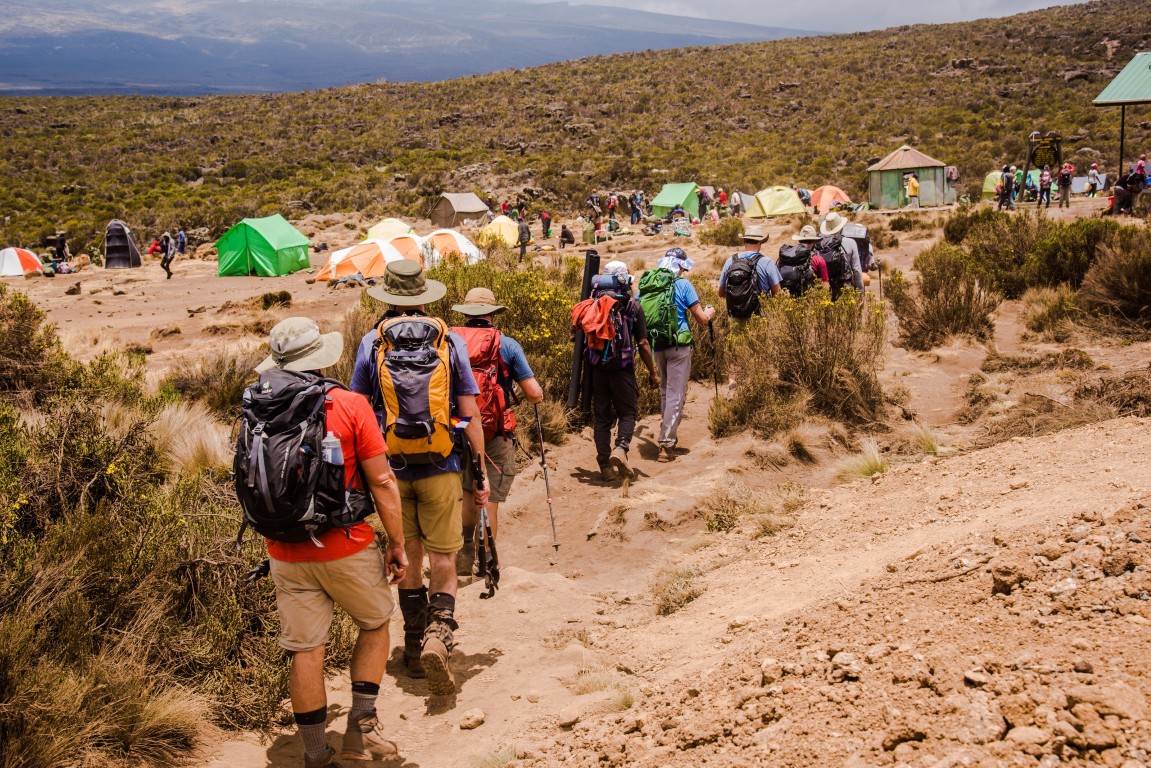
Most daily hikes take from 4 – 7 hours. The pace is slow and not forced at all. There is a rest at least once every hour and plenty of time to take photos, enjoy the view and chat.

When you arrive at the campsite you will find the tents erected and your bags ready to collect. In the morning please have your bags packed before breakfast.

Summit Day

Expect a long day starting at midnight and getting all the way back down to High Camp by about 4 pm in the afternoon. The route up will be in the darkness and it will be cold and often windy.

Do prepare with good warm clothing and protect your extremities and face.

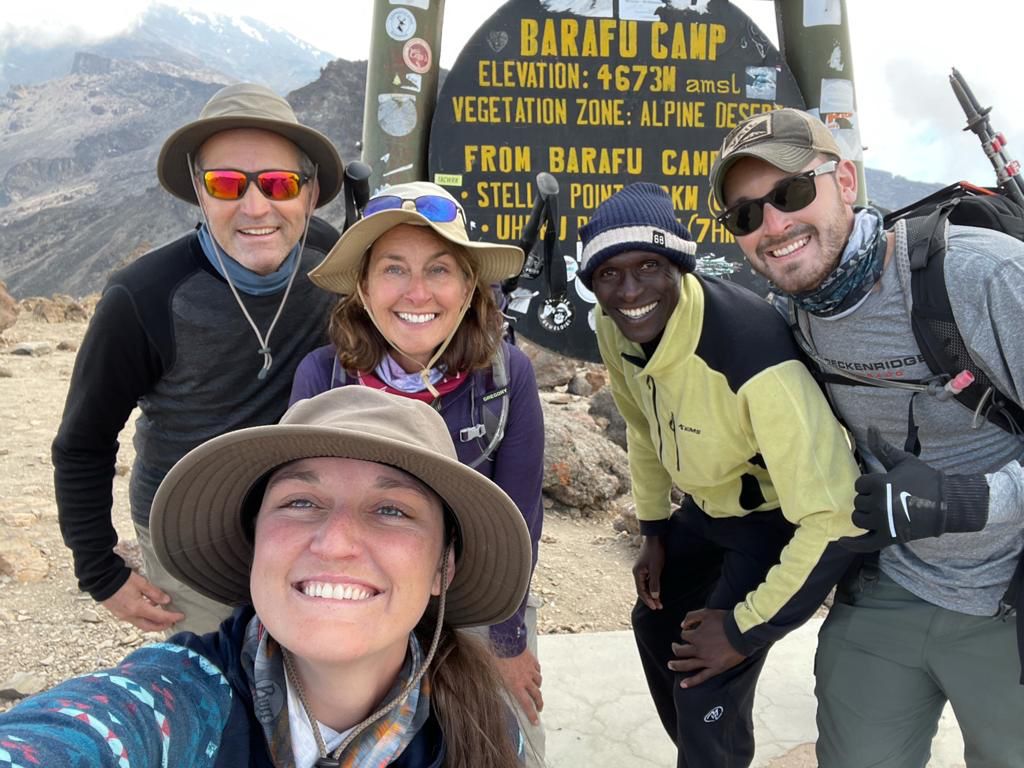
From Barafu Camp to the crater rim will take about 6 to 8 hours, and you will arrive with the dawn which is very special. From the rim (Stella Point) it is a further hour to the top, so expect summit time to be between 7 am and 9 am.

With an hour on top for photos and enjoying the exceptional view, and feeling absolutely elated, the route down is dusty, loose and quite a strain on the knees. Take it easy and stay with one of the guides; they will split up to cover all the mini-groups that naturally form for descent.

When you get back to Barafu pack your bags for the porters to take down (you should prepare this the night before), take a rest and lunch and then drop down to High Camp which is a further two hours to the edge of the forest.

Some people question this, but it is necessary to get lower because Barafu is still at 4600 metres and your body will thank you for losing altitude.

It may be the last thing you want to do after having summited Kilimanjaro, but it is necessary.

During your climb of Kilimanjaro generally, ‘bed tea’ is at about 6.30 – 7.00 am, breakfast is between 7.30 am and 8.00 am, and departure from camp is at 8.30 am latest.

There is a snack lunch at midday, tea and biscuits around 4 pm and dinner at 7 pm.

Summit morning is different; tea and biscuits at 11.30 pm and start hiking at midnight or sometimes 1 am.

Most daily hikes take from 4 – 7 hours. The pace is slow and not forced at all. There is a rest at least once every hour and plenty of time to take photos, enjoy the view and chat.

When you arrive at the campsite you will find the tents erected and your bags ready to collect. In the morning please have your bags packed before breakfast.


Summit Day

Expect a long day starting at midnight and getting all the way back down to High Camp by about 4 pm in the afternoon. The route up will be in the darkness and it will be cold and often windy.

Do prepare with good warm clothing and protect your extremities and face.

From Barafu Camp to the crater rim will take about 6 to 8 hours, and you will arrive with the dawn which is very special. From the rim (Stella Point) it is a further hour to the top, so expect summit time to be between 7 am and 9 am.

With an hour on top for photos and enjoying the exceptional view, and feeling absolutely elated, the route down is dusty, loose and quite a strain on the knees. Take it easy and stay with one of the guides; they will split up to cover all the mini-groups that naturally form for descent.

When you get back to Barafu pack your bags for the porters to take down (you should prepare this the night before), take a rest and lunch and then drop down to High Camp which is a further two hours to the edge of the forest.

Some people question this, but it is necessary to get lower because Barafu is still at 4600 metres and your body will thank you for losing altitude.

It may be the last thing you want to do after having summited Kilimanjaro, but it is necessary.

How to avoid Altitude Sickeness

Kilimanjaro

Altitude sickness, also called Acute Mountain Sickness (AMS), is an illness caused by exposure to the low air pressure; especially low partial pressure of oxygen, which many climbers experience at high altitudes.

There are a number of practical steps that you can take to minimize the chances of having to abandon your climb of Kilimanjaro due to the effects of altitude sickness:

Acclimatize prior to the climb.

Easier said than done if you live at sea level but if you are able to spend time at high altitude prior to the actual Kilimanjaro climb then this is the very best way to avoid altitude sickness. Climbing Mount Meru prior to Kilimanjaro is also an excellent option.

Start the climb in the best possible health and with an excellent level of physical fitness. If you are fatigued, unwell or stressed you are more likely to suffer from altitude sickness.

Slow and steady.

You need to keep your respiration rate low enough to maintain a normal conversation. If you are panting or breathing hard, you must slow down. Overworking your heart and lungs substantially increases your chance of becoming ill.

Drink much water as you can.

Getting up in the middle of the cold night may be an unpleasant thought but altitude dehydrates you and the better you hydrate the quicker your body is able to acclimatize.

Eat well.

Even though you may not feel like it you should eat as much as you possibly can at every meal. This will give you plenty of energy and help you to feel great. I find it also helps me to keep warm and sleep well at night.

Sleep well.

Sleeping well in a tent is a acquired skill. Spend a few nights out in your tent and sleeping bag prior to your climb so that you have your routine nailed and are used to sleeping in a sleeping bag on a hard surface.

Diamox:

Diamox is the prescription name for the generic drug acetazolamide. And, though acetazolamide is prescribed for the medical treatment of glaucoma, sleep apnea, epilepsy and hypertension, it’s also used to prevent altitude sickness. You should consult with your doctor before taking it.

Relax.

Relax and think positive. Although not pleasant the vast majority of people suffer only mild altitude sickness. Don’t think that every headache is cerebral oedema and every cough pulmonary oedema as this is unlikely. By relaxing and enjoying the climb you are far more likely to have a trouble free experience.

Food and Drinks During Kilimanjaro Climb

Kilimanjaro

You will be amazed at the variety, quality & quantity of the food we serve to you whilst you are on your Mount Kilimanjaro climb. As you are trekking for between 6-9 hours a day (before summit night) you’ll be burning a lot of calories – and as you are at altitude – even more than you would at sea level.

Ensuring that you are well fed – and fully fuelled for climbing Kilimanjaro is paramount – so you’ve enough energy to get to the top. On all of our Kilimanjaro climbs you will be fully supported by a team of chefs, and cooking porters whom will cater for every dietary requirement and you will have 3 hot cooked meals a day – plus a plentiful supply of water and hot drinks.

The menu on Kilimanjaro is designed to ensure your food intake matches your level of exertion. It will provide you with a good balance of protein, carbohydrates, fruit and vegetables. When you are at altitude you could start to feel nauseous and your appetite may be suppressed, so the meals prepared at high altitude usually contain more carbohydrates and less protein to help you to digest you food.

Your meals will be prepared by your cooks on Kilimanjaro and the food will be carried by your porters. The menu will consist of a mixture of western and African style dishes. You will receive cooked breakfasts, with tea or coffee. A packed lunch or cooked lunch at camp, (depending on the length of the days walking). Afternoon tea on arrival at camp; usually popcorn or biscuits with tea and coffee. For dinner you will usually start with soup, followed by meat or vegetables in a sauce, served with either potatoes, pasta or rice and salad. There will also be fresh fruit available for most meals.

Each day you will be served different menus whilst on the climb and the below is a guideline to what type of food you can expect on Kilimanjaro:

  • Breakfast – porridge (oats or millet), toast, eggs, sausages, cereal & fruit, Tea, coffee, cocoa, juice, Peanut butter, jam, honey
  • Lunch – soup, rice, vegetables, chicken, casserole, chips, sandwiches 
  • Dinner – soup, breads, stews, pasta, rice, vegetables, chips
  • Snacks at camp – on arrival into camp there will be salty snacks & biscuits
  • Each stop there will be purified water, hot water for teas, coffee & hot chocolate!

Snacks

You may wish to bring your own snacks to provide well deserved treat, or energy boost! Chocolate is generally the best answer and if it has nuts in then even better, but whatever you choose make sure it is a favourite treat and not a ‘power bar’, or ‘energy gel’. If you are suffering from altitude sickness then your appetite may be suppressed and these snacks may become a good supplement to your meals, so make sure it is something that you enjoy eating! A powdered energy drink such as lucozade sport is also a good source of energy and will help with the taste of the water if you have been using iodine tablets.

Water

You will need to consume more water on Kilimanjaro than you would normally drink on an average day at home to keep properly hydrated. This is due to the physically exertion of walking between  4 – 8 hours per day and the effect of being at high altitude.

Depending on your physiology you will need to take in between 3-4 liters of water each day of Kilimanjaro trekking.

Which is a lot of water…

So many people find that taking electrolytes or flavoured cordial helps to keep the taste buds excited. There will also be hot drinking water at the camp eat morning/ evening as well as the lunch stop with a selection of teas, coffee and hot chocolate.

Water is provided by the porters who will fetch water from the streams near the camps on Kilimanjaro. The water is then boiled by the porters, which should be fine for drinking. However you may wish to bring additional water treatment methods such as; water filters or Iodine tablets if you have a particularly sensitive stomach.

Dietary Restrictions? No Problem…

Remember to inform us if you have any special dietary requirements – Our chefs are also able to accommodate almost any dietary restrictions so that vegans, vegetarians, gluten and lactose intolerant and those with restrictions due to their religious beliefs are all accommodated. Just make sure you let us know in advance of any dietary restrictions you may have

Also if you’ve any questions or concerns about the food whilst on the challenge feel free to speak to our team and we can give you more information!

Important Information on Kilimanjaro

Kilimanjaro

First of all, your safety and comfort are of utmost importance for us.

Kilimanjaro is a non-technical climb but goes to very high altitude so safety measures need to be taken very seriously. It is important to climb Kilimanjaro with an experienced operator, Guide and crew who are careful trained in high altitude issues, bring the necessary medical equipment, and have the skills to  monitor their clients on a daily basis as well as having the backing of an experienced team on the ground who can handle all types of evacuations.

All of our guides are certified as Wilderness First Responders. This means that they have all the skills necessary to handle medical emergencies on the mountain in a way that reduces the risk of serious outcomes. Our guides are trained to identify and carefully monitor developing high altitude issues and discuss them with you continually. They understand the importance of gathering all your health data when evaluating potential altitude sickness not just relying on single factors such as the daily collected pulse ox meter data.

In case of lost or delayed luggage on arrival, you will be required to go to the Swissport desk just beside the baggage reclaim area and complete a form detailing what you’ve lost, which hotel you’ll be staying at, and a contact name and telephone number for your operator in Moshi/Arusha.

We recommend that you wear your walking boots to travel and pack as many essential items as possible in your carry-on luggage. If your luggage is delayed we can then do our best to kit you out to start the climb on time.  All necessary gear will be provided from our own stock. At the end of the climb all gear must be returned to the Lead Guide. A nominal charge for cleaning items will be made of US$10 per item.  Also we will take you to a shop where you can buy toiletry items, e.g. toothbrush.

We recommend all our clients stay in the town of Moshi  rather than Arusha before and after the climb due to its proximity to Kilimanjaro.

We do use Park View Inn and Weruweru River Lodge for our client stays. These hotels are basic but clean and very comfortable with very friendly and helpful staff.

All hotel accommodation before and after the climb is based on a bed and breakfast.  If you wish to buy additional meals (lunch and dinner) then there are restaurants and bars available in the hotel.  Hotels accepts payment by credit cards (visa/master cards)

Also you can upgrade your staying in Moshi to Kilimanjaro Wonders Hotel (4 star hotel). This upgrading will have an additional cost, $33 USD for a single room and $43 USD for a double/twin room.

All our tours include airport transfers to pick you up at Kilimanjaro International Airport (JRO) and take you to your pre-climb hotel in Moshi. Same drop off from Moshi to Kilimanjaro airport after climb is included.

On departure day make sure to arrange a time for the transfer that gets you to the airport in plenty of time for check-in. Remember for international flights you need to arrive 3 hours before departure. Delays can occur, and making your flight is your responsibility!

Up on your arrival you will be met at Kilimanjaro international airport (JRO) by Top Climbers Expedition member holding a sign board reading “TOP CLIMBERS EXPEDITION” and your name below.  So, no confusion.

Drive from Kilimanjaro international airport (JRO) to Moshi is almost an hour.  Once you arrive, we will then let you know what time is your pre-trek briefing. At the briefing session, we’ll review the plans for the climb with you,  checking your gear so as to make sure that you have all the right gear, and answer any questions you may have.

In case of any emergency on arrival then contact the following numbers: +255 765 993 193 or +255 713 390 063. We recommend you put this telephone number into your mobile phone before you depart for Tanzania. This will be your main contact for any issues that arise while you are in Tanzania.

Along with many other countries in the world, Tanzania has now committed to make a stand against the impact of plastic waste on the environment. Please be informed that the government of the Republic of Tanzania has made an official note to burn the usage of plastic carrier bags. During your preparation and packing please avoid the plastic bags in order to avoid any inconveniences that may occur.

Visitors to Tanzania are advised to avoid carrying plastic carrier bags or packing plastic carrier bags or items in plastic bags in the suitcase or hand luggage before embarking on visiting Tanzania. Special desk will be designated at all entry points for surrender of plastics carrier bags that visitors may be bringing into Tanzania.

Plastic carrier items know as ‘’Ziploc bags’’ that are specifically used to carry toiletries will be permitted as they are expected to remain in the permanent possession of visitors and are not expected to be disposed in the country.

[/mpc_tab][m

Top Climbers Expedition provides the following safety equipment during the climb

PULSE OXIMETER

A pulse oximeter is a non-invasive sensor device that is placed on the fingertip to monitor a person’s Oxygen saturation. Every morning and evening, each trip member uses the oximeter and the leader records the reading on a report. This allows our leaders to track everyone’s oxygen history and help them identify the climbers who may be falling behind in acclimatization.

EMERGENCY OXYGEN

Top climbers Expedition carries a 3 Litre canister of compressed pure oxygen for emergency purposes on every climb. This oxygen is only used to treat a stricken climber in conjunction with immediate descent. In other words, it is administered only in a rescue scenario and as a part of evacuation off the mountain. It’s not advised at all to use a personal oxygen system to assist climbers on Mount Kilimanjaro. This is not standard practice.

VHF RADIOS, CELL PHONE AND HF RADIO

Our guides are in daily contact with our base in Moshi and give updates on each trip member’s progress up the mountain.

FIRST AID KIT

We normally carry with us the first aid kit in case of emergency and altitude sickness.

STETHOSCOPE

This is an acoustic medical device for auscultation or listening to the internal sounds of a human body. We use a stethoscope to listen to your lungs to assess if there is any fluid build-up, a sign of HAPE.

EVACUATION ON KILIMANJARO MOUNTAIN

HELICOPTER EVACUATION:

Apart from safety procedure that we take during the climb, we are also partnered with Kilimanjaro Search and Rescue (SAR).  This is helicopter rescue operation which conducts modern, efficient rescue services on Kilimanjaro. Helicopters wait nearby at Moshi Airport. Once a emergency call is received, rescue procedures are activated within few minutes. Expert pilots, highly trained rescue doctors and emergency flight technicians are exceptionally qualified and prepared for all emergencies on the mountain.

Kilimanjaro SAR manages a medical clinic that focuses on high altitude related illnesses, mountain medicine, and trauma. It is staffed 24 hours a day by physicians, nurses and assistants offering the best possible treatment. This group is advised by a unique Clinical Advisory Team made up of top level medical and high altitude professionals.

There are now helicopter evacuation points on all major route locations on your trekking tour of Kilimanjaro such as Horombo, Barranco, Barafu, Kosovo, Stella, Millennium and Shira.  Shira Campsite is also accessible by rescue vehicle within ninety minutes from its park gate.

RESCUE CAR

The Kilimanjaro national park Authority provides a rescue car in case of emergency. There are ranger posts on the mountain with radio contact to the park authority headquarter. A sick climber can then be transferred directly to Hospital. If a sick climber is already recovering from altitude sickness then will be taken directly to the lodge. In the case of more minor conditions that prevent a climber from continuing further up the mountain but do not require hospital treatment, the climber will return to the closest gate with one of the guides and will be transferred back to the hotel in Moshi for some rest and medication if necessary. Please note that the extra nights in the hotel are not covered in the cost of your trip. So we recommend you have extra funds with you in case you need to return from the mountain early. The guide will keep monitoring your health for a few next days and keep you busy with additional activities around Moshi if you are feeling well enough.

STRETCHER EVACUTION:

Large, one-wheeled rescue stretchers are found on Mount Kilimanjaro but they are only available within a small area of the park. That means that if a climber is unable to walk due to severe altitude sickness or a leg injury that compromises mobility, getting that climber down the mountain could pose difficult challenges for Kilimanjaro operators. The stretcher evacuation is until the point that can be reached by rescue car or Helicopter.